As an Amazon Associate I earn from qualifying purchases.
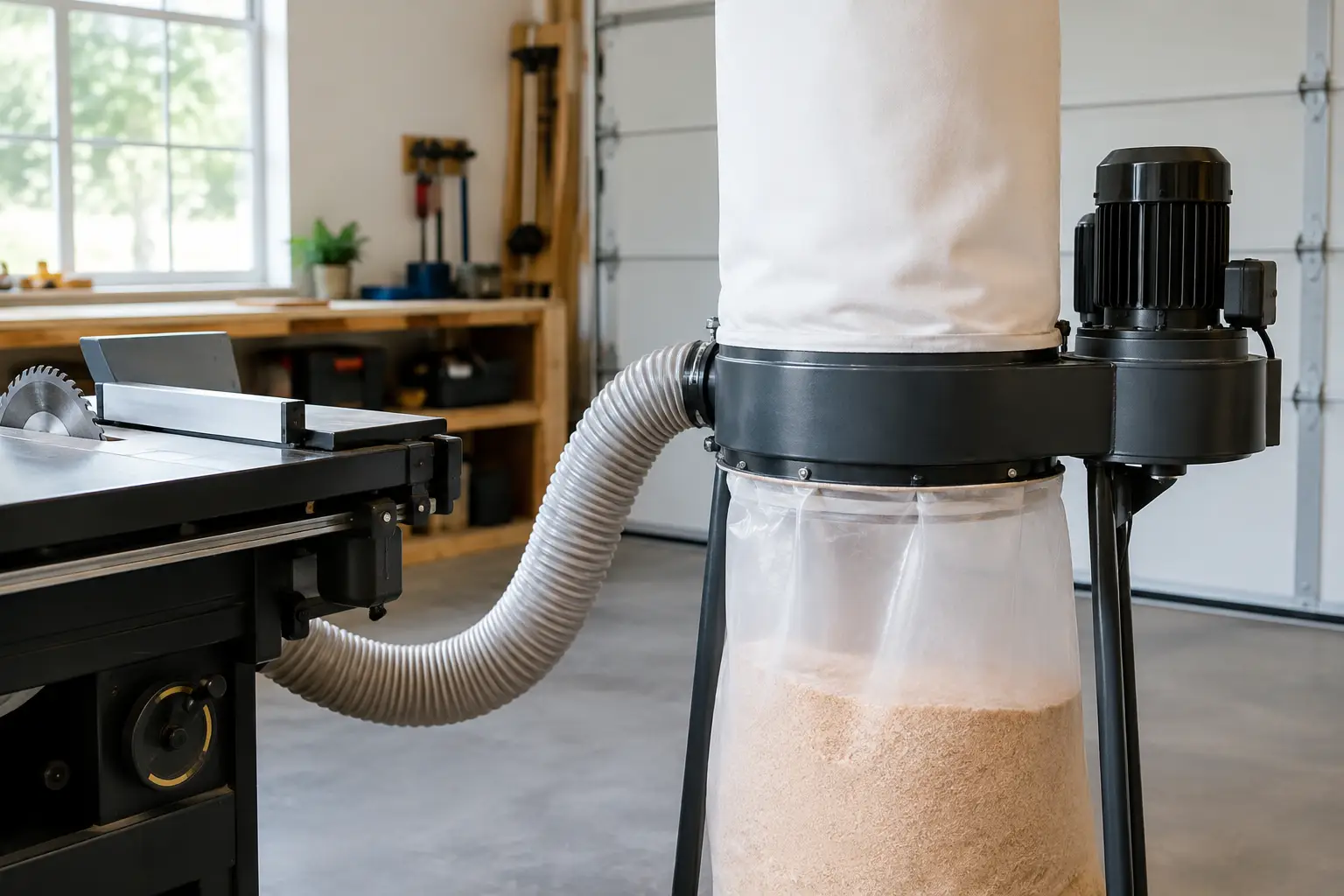
A sharp static shock from a plastic dust collection hose is something many woodworkers experience, especially after running a planer, sander, or table saw in a dry garage. It raises a reasonable question: can dust collectors spark?
Yes. A dust collection system can encounter sparks from several sources, including static electricity, electrical faults, and metal objects striking the impeller. However, these situations do not all carry the same level of risk.
For someone working in a one-car garage, the important thing is understanding where those sparks come from, how fine wood dust changes the danger, and what a standard portable dust collector can and cannot safely handle.
A static shock against your arm is not automatically a sign that an explosion is about to happen. But wood dust is combustible, and a collector filled with fine particles should never be treated as harmless equipment.
Can Dust Collectors Spark From Static Electricity?
Yes. Moving wood chips and dust through plastic hoses and ductwork can generate static electrical charges. Plastic is an electrical insulator, so it does not dissipate those charges in the same way as properly bonded and grounded conductive metal ductwork.
Eventually, you may feel a discharge when touching the hose, a metal fitting, or the collector itself. It often feels like a small snap against your hand or arm.
This is particularly noticeable in dry conditions, with long flexible hoses, and when a machine produces large amounts of fine dust.
However, there is an important distinction between a static shock and an ignition event.
A combustible dust explosion requires more than a little static electricity. The dust must be combustible, dispersed in air at an appropriate concentration, exposed to an effective ignition source, and confined sufficiently for a deflagration to develop.
That is why a static shock in a home workshop should not automatically be treated as evidence of an imminent explosion. At the same time, it is not a reason to ignore the manufacturer’s grounding instructions or leave dust accumulation unchecked.
Fine wood dust deserves particular attention because it can become suspended in the air and collect inside ductwork, filters, and collection containers.
What Causes Sparks Inside a Dust Collector?
Static electricity is only one possible source. In a typical garage woodworking setup, several other conditions deserve attention.
| Product | Why Consider It? | Amazon USA |
|---|---|---|
| Handheld Metal Detector | Helps locate hidden nails and metal in reclaimed lumber before cutting. | Check Price on Amazon → |
| Bare Copper Grounding Wire | Copper wire for grounding arrangements designed according to the dust collector manufacturer’s instructions. | Check Price on Amazon → |
| POWERTEC Dust Collection Hose Kit | A practical hose and fitting option for connecting compatible woodworking machines to a dust collector. | Check Price on Amazon → |
As an Amazon Associate, I earn from qualifying purchases.
1. Metal striking the impeller
This is one of the situations I would take particularly seriously.
A nail, screw, staple, or small piece of steel hidden in reclaimed lumber can travel through the collection hose and strike the impeller.
Depending on the collector’s construction and the material involved, that impact can produce sparks or hot fragments. Those particles may enter a collection bag containing combustible wood dust.
Some dust collector manufacturers specifically warn against allowing steel or rocks to strike the impeller because a spark can start a smoldering fire inside accumulated dust.
Before cutting pallet wood, construction lumber, or reclaimed boards, inspect the material for embedded metal. A handheld metal detector can help when you regularly work with used lumber.
2. Electrical problems
A damaged power cord, loose connection, worn switch, or failing motor can create electrical arcing or excessive heat.
These problems are different from ordinary static buildup along a plastic hose. They require electrical inspection and repair, not simply a grounding wire attached to the ductwork.
If you notice a burning electrical smell, visible arcing, unusual motor noise, or repeated breaker trips, stop using the collector.
3. Hot particles from other operations
Grinding, welding, cutting metal, and similar operations can generate hot particles that should never enter a standard woodworking dust collector.
A spark from a grinder is not the same thing as a static shock from a plastic hose. It is an actual hot ignition source that can travel into a filter or collection bag.
Keep metalworking operations separate from your woodworking collection system.
Why Fine Wood Dust Is More Dangerous Than Large Wood Chips
A planer produces relatively large shavings, while a random orbital sander produces much finer particles.
Both materials are combustible, but fine dust presents a different problem because small particles can remain suspended in the air much more easily.
Fine dust can also settle on:
- Ceiling joists and rafters.
- Shelves and storage cabinets.
- Electrical equipment.
- Motor housings.
- Ductwork and filters.
- The inside of a dust collection drum.
This is why cleaning your garage shop is part of fire prevention, not just keeping the floor looking good.
The Occupational Safety and Health Administration (OSHA) identifies fine wood dust, electrical faults, static discharge, and hot work such as welding as potential fire and explosion hazards in woodworking environments.
An additional concern is secondary dust explosions. An initial fire or deflagration can disturb settled dust and send more combustible particles into the air.
For a home workshop, the practical lesson is simple: do not allow layers of fine sawdust to accumulate around your machines, above your workbench, or on overhead surfaces.
Never use compressed air to blow accumulated dust around the garage. That can turn settled dust into an airborne cloud. Use an appropriate vacuum or another cleaning method that does not disperse the material.
Does Grounding a Dust Collector Prevent Sparks?
Grounding and bonding can help control static electricity, but they are not a complete fire or explosion protection system.
Metal ductwork should have electrical continuity across its sections and be properly bonded and grounded according to the system design. The collector itself should also have a properly grounded electrical connection when required by its manufacturer.
Plastic ductwork is more complicated because PVC and ordinary plastic hose are insulators.
Some manufacturers recommend installing a continuous bare copper wire inside nonconductive ductwork and connecting it according to their grounding instructions. Others provide different solutions for their particular equipment.
There is also an important technical distinction: a wire attached to the outside of PVC does not make the plastic itself conductive. A grounding arrangement must be designed to control charge on the relevant conductive components and follow the equipment manufacturer’s instructions.
If your collector manual specifies an internal grounding wire, follow its installation procedure. Make sure the wire cannot interfere with the impeller or moving components.
Do not assume that wrapping a random piece of copper wire around a hose is sufficient protection.
Also, never remove the grounding pin from a power plug, attach a wire to questionable plumbing, or improvise a connection to a random metal object.
Most importantly, grounding does not turn an ordinary portable woodworking collector into an explosion-proof system. It does not make grinding metal, collecting hot debris, or handling hazardous combustible powders safe.
If you are unsure whether your system is properly bonded and grounded, have the electrical arrangement evaluated by a qualified professional.
How to Make a Dust Collection System Safer in a Small Garage Shop
A one-car garage does not have much room for large stationary equipment, long duct runs, or complicated collection networks.
That makes a simple and well-maintained setup especially useful.
Keep the collector close to the machine
For a portable collector, placing it reasonably close to the machine helps reduce unnecessary hose length and resistance.
You also want enough clearance to empty the collection bag, inspect the filter, and move the unit without blocking your garage door or walking space.
Avoid unnecessarily long flexible hoses
Long flexible hoses and tight bends increase airflow resistance.
If you are using a portable 4-inch dust collector, start with the correct hose diameter for the machine and collector rather than immediately reducing everything to a small shop-vac hose.
The difference between advertised airflow and actual airflow at the machine can be significant.
A collector’s CFM rating does not tell the whole story. Hose diameter, fittings, filter condition, and the number of bends all affect real-world performance.
Use a separator when it makes sense
A properly sized dust separator can capture a substantial portion of the larger chips before they reach the collector’s filter and collection bag.
This is particularly useful when working with a planer or jointer.
A separator does not make hot particles or metal grinding debris safe to collect. Its job is to separate material and reduce the maintenance burden on the main collector.
Inspect filters and collection bags regularly
A clogged filter restricts airflow and can reduce dust capture at the machine.
An overfilled collection bag can also interfere with normal operation and create unnecessary maintenance problems.
Check for leaks around hose connections, damaged filters, loose clamps, and excessive dust buildup inside the system.
If your collector is no longer capturing dust effectively, do not assume that buying a larger motor is the only solution.
Keep the garage clean
Pay particular attention to dust that settles on shelves, behind machines, and above the workbench.
A collector cannot capture every particle generated by a woodworking operation. Some fine dust will escape, even when the system is working properly.
Use suitable cleaning equipment and avoid blowing dust into the air with compressed air.
Can You Use a Dust Collector for Grinding Metal or Hot Ash?
No. A standard woodworking dust collector should not be used to collect sparks, hot metal particles, fireplace ash, or other potentially ignitable material.
Grinding and cutting metal can send hot fragments directly into the collection system. Those particles can reach the impeller, filter, or dust container.
The same concern applies to hot ash. Material that looks extinguished on the surface can contain hidden embers.
Aluminum and magnesium dust also require special attention. Fine metal powders can have different combustion characteristics from ordinary wood dust and may require specially designed collection equipment.
Do not assume that a woodworking collector is suitable for these materials simply because they fit through the inlet.
Unknown powders, flammable residues, and dust from coatings or chemicals should also stay out of a standard collector unless the equipment is specifically approved for that material.
If your garage includes both woodworking and metalworking, keep the operations and their collection systems separate.
A dedicated collection system designed for a particular combustible metal or hazardous material is not interchangeable with an ordinary portable woodworking unit.
What Should You Do If You Notice a Burning Smell?
A burning smell while the dust collector is running should never be ignored.
It could come from an overheating motor, damaged electrical wiring, a slipping belt, excessive friction, or smoldering material inside the collection system.
Stop the operation immediately. If it is safe to do so, switch off and disconnect the equipment from power. Do not open a collector that may contain a fire or continue operating it to see whether the smell disappears.
If you see smoke, flames, or signs of an active fire, move away and contact emergency services. Do not risk opening or emptying a potentially burning dust container.
Once the equipment has been confirmed safe, inspect the motor, electrical connections, filter, collection bag, hose, and impeller area according to the manufacturer’s instructions.
If metal has entered the collector, follow the manufacturer’s specific procedure for handling contaminated dust and inspecting the equipment.
Do not return the collector to service until the source of the problem has been identified and corrected.
The Practical Takeaway: Can Dust Collectors Spark?
Yes, dust collectors can encounter sparks from static electricity, electrical faults, or metal objects striking the impeller.
But not every spark represents the same danger. A small static shock from a plastic hose is different from a hot metal fragment entering a collection bag filled with fine wood dust.
For a small garage workshop, focus on a few practical habits:
- Follow the manufacturer’s grounding and electrical instructions.
- Keep fine wood dust from accumulating around the shop.
- Inspect reclaimed lumber before cutting.
- Keep grinding, welding, and hot debris away from woodworking collection equipment.
- Maintain clean filters, hoses, and collection bags.
- Stop using the collector if you notice burning smells, electrical problems, or unusual noises.
A compact dust collection setup does not need to be complicated to work well. Keeping the system maintained, using it only for materials it was designed to handle, and controlling ignition sources are far more important than adding unnecessary equipment to an already crowded garage.

Leave a Reply