
As an Amazon Associate I earn from qualifying purchases.
Choosing the right dust separator for a small shop comes down to three things: the type of dust collector you use, the airflow your tools need, and how much room you have for the collection bin. Get those three things right, and you can keep chips out of your filter without sacrificing valuable floor space.
For a one-car garage workshop, the best dust separator is not necessarily the biggest one. A compact cyclone connected to a shop vacuum may be ideal for sanding and handheld tools, while a larger separator with 4-inch connections makes more sense for a table saw or benchtop planer connected to a dust collector.
The key is matching the separator to the equipment behind it. A separator that restricts airflow can make an otherwise capable dust collector perform poorly. An oversized separator can waste money and space without improving dust collection.
Start With the Tool and Collector, Not the Separator
Before buying a dust separator, identify the tools you use most often and the type of collector they require.
A shop vacuum and a dust collector serve different purposes. Although both move air, they are designed to operate under different conditions.
A shop vacuum produces relatively high static pressure, making it useful for pulling dust through small hoses and narrow tool ports. It works well with random-orbit sanders, handheld routers, track saws, and many compact woodworking tools.
For this type of setup, a separator designed for a 1.5-inch to 2.5-inch vacuum hose is usually a practical starting point. A 5-gallon bucket or compact collection container can keep the entire system small enough to roll under a workbench.
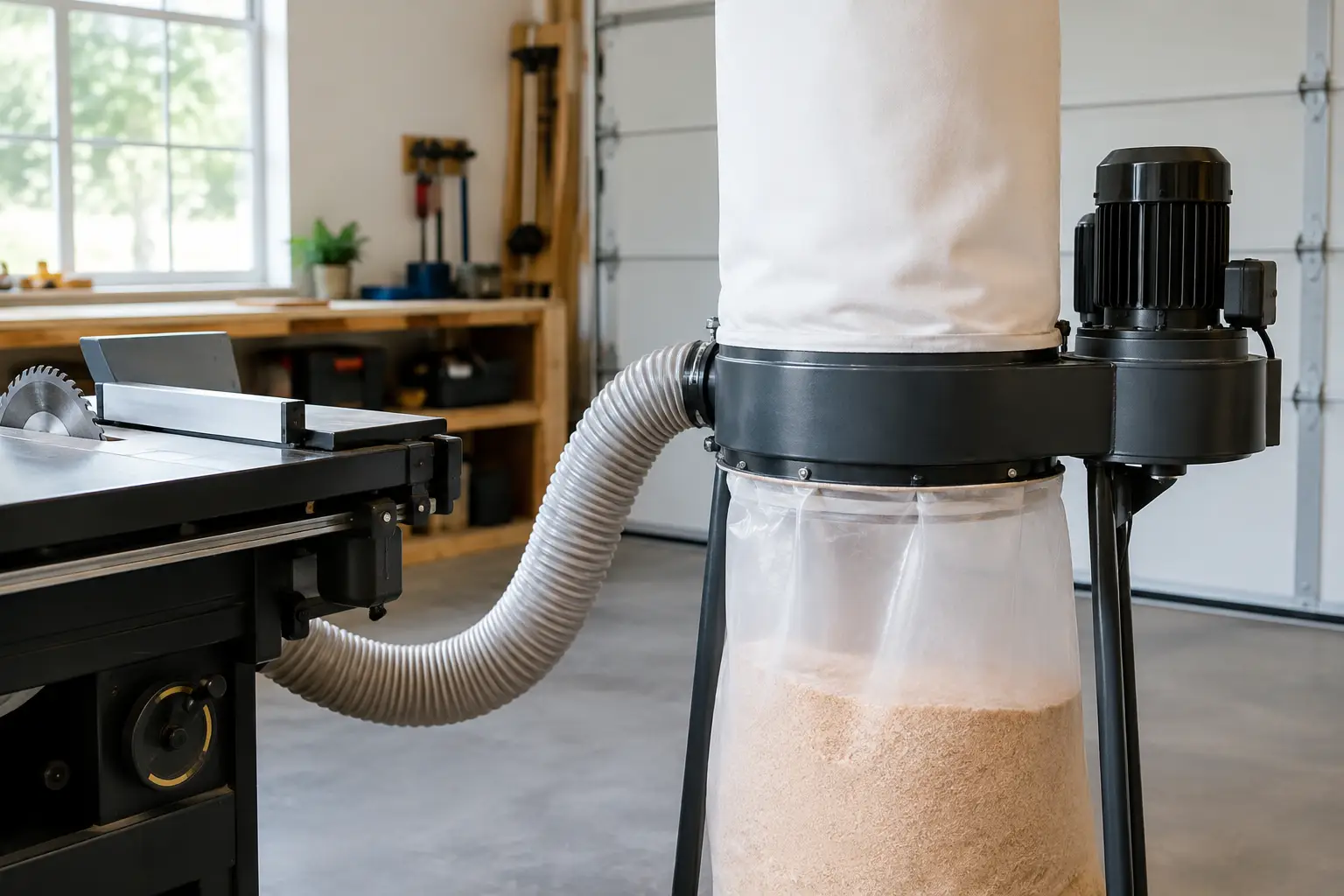
A single-stage dust collector moves more air through larger openings, making it better suited to table saws, jointers, planers, and other machines with larger dust ports.
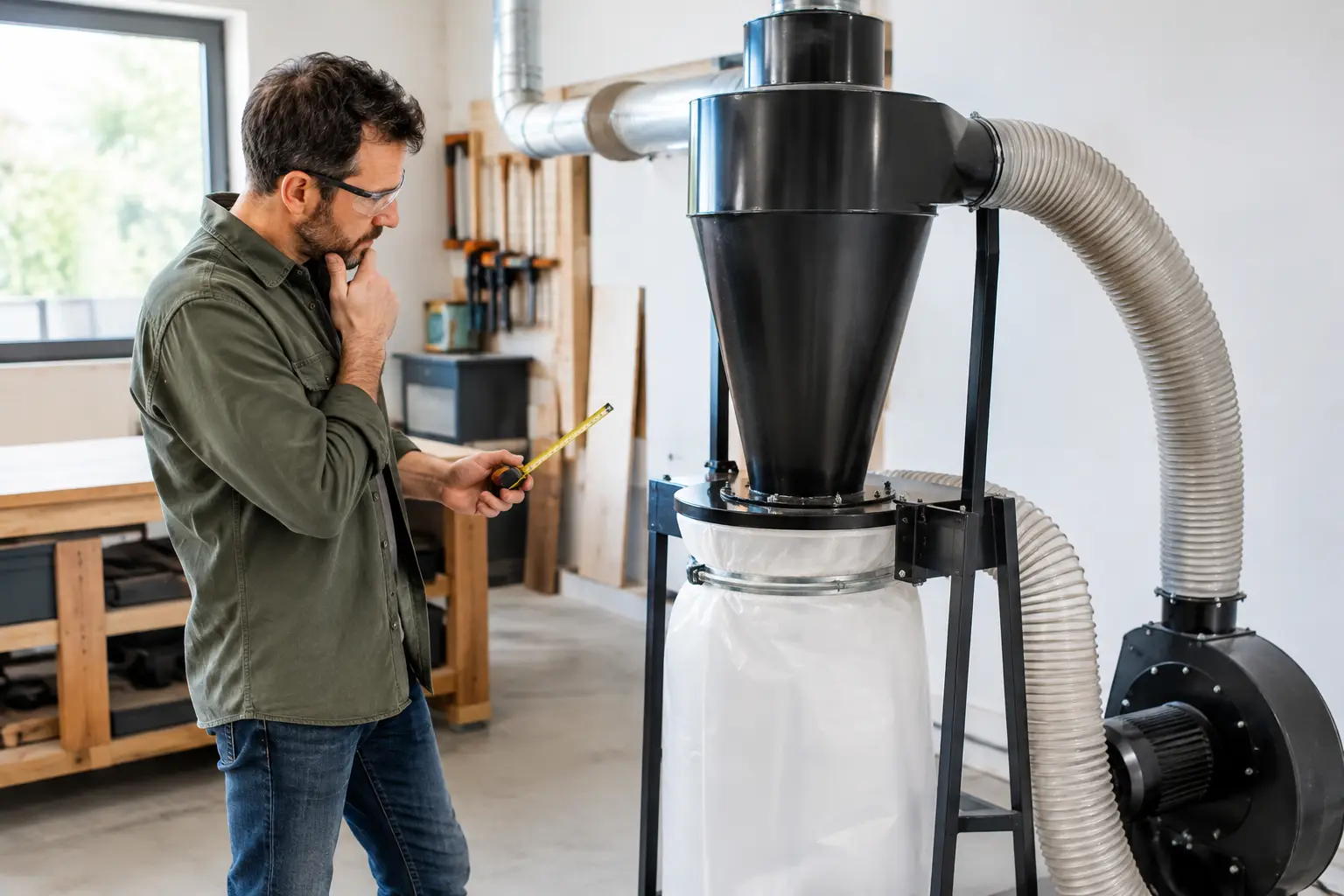
For these tools, look for a cyclone or pre-separator specifically designed for dust collectors. A model compatible with a 4-inch duct system is a common choice for small garage workshops, provided its airflow requirements match the collector.
Do not assume that a separator designed for a shop vacuum will work equally well with a larger dust collector. A small cyclone with 2-inch connections can become a significant restriction in a system designed to move several hundred CFM.
The opposite problem also occurs. A large cyclone designed for a high-airflow dust collector may perform poorly when connected to a shop vacuum that cannot supply the required airflow.
The first sizing rule is simple: match the separator to the collector’s actual operating range, not just the size of the container or the advertised horsepower.
| Dust Separator | Best For | Affiliate Link |
|---|---|---|
| Oneida Dust Deputy 2.5 | Shop vacuums and handheld woodworking tools | Check Price on Amazon → |
| Dustopper PRO | Compact shop-vac setups and 5-gallon buckets | Check Price on Amazon → |
| Oneida Super Dust Deputy 4/5 | Single-stage dust collectors and larger duct systems | Check Price on Amazon → |
How to Size Dust Separator Airflow and Port Diameter
When sizing a dust separator, pay attention to inlet diameter, outlet diameter, airflow requirements, and the resistance created by the complete system.
The diameter of the hose matters because a smaller opening can restrict airflow. However, choosing a larger hose alone does not guarantee better performance. The collector must be capable of moving enough air through the larger duct, and the tool must capture dust effectively at its source.
What CFM Do You Need for a Dust Separator?
CFM stands for cubic feet per minute. It measures the volume of air moving through a dust collection system.
A collector’s advertised CFM rating does not necessarily represent the airflow available at your machine. The separator, hose, elbows, fittings, tool port, and filter all contribute resistance.
For a 4-inch circular duct with an actual inside diameter of 4 inches, airflow at 4,000 feet per minute corresponds to approximately 349 CFM. This is a useful reference calculation, not a guarantee that your machine will receive that amount of air.
Your actual airflow may be lower because of restrictions in the system.
For small woodworking shops, the following table provides a starting point for selecting the right separator category.
| Shop setup | Separator size to consider | Collection container | |—|—|—| | Handheld sanders and small power tools | Vacuum-compatible separator with 1.5-inch to 2.5-inch connections | 5-gallon bucket | | Router and track saw connected to a shop vacuum | Vacuum-compatible cyclone with matching hose connections | 5-gallon container | | Table saw with a 4-inch dust port | Dust-collector cyclone compatible with the collector’s airflow | 15- to 30-gallon bin | | Benchtop planer connected to a dust collector | High-airflow separator matched to the collector | 20- to 30-gallon bin | | Frequent planing or milling | Separator and bin sized for sustained chip production | 30 gallons or larger, as space allows |
These are practical starting points rather than universal specifications. Check the separator manufacturer’s minimum airflow, connection dimensions, and compatibility requirements before buying.
Match the Separator to the Hose
Your dust collection hose size and length can make a noticeable difference in system performance.
Whenever possible, avoid reducing the hose diameter before the separator unless the manufacturer specifies that configuration. A narrow adapter, abrupt transition, or undersized elbow can add resistance that reduces the airflow available at the machine.
For a small garage shop, keep hose runs short and use smooth, gradual bends where practical. A mobile collector parked beside the active tool can outperform a poorly designed arrangement with long hoses and multiple tight turns.
Also consider how the hose will move when you change tools. A setup that requires you to drag a heavy hose across the garage or step over it repeatedly can quickly become inconvenient.
If your collector has a 5-inch or 6-inch inlet, do not automatically reduce everything to 4 inches. The correct arrangement depends on the collector’s design, the tool connections, and the separator’s approved configuration.
A 4-inch connection is common in compact workshops, but it is not automatically the best choice for every machine or collector.
Do Not Size by Advertised CFM Alone
Manufacturers may publish airflow figures measured under conditions that differ from those in your workshop. Some ratings are obtained with minimal restriction, while a complete collection system adds resistance at every connection.
Horsepower alone is not a reliable way to choose a separator, either.
A separator designed for a high-airflow dust collector may need at least 350 CFM to operate as intended. A small shop vacuum may deliver much less airflow under load, even though it develops higher static pressure.
That is why you should check the separator’s specifications rather than relying on its physical size.
Before purchasing, verify these four details:
- The separator’s intended collector type.
- The required minimum airflow, if specified.
- The inlet and outlet dimensions.
- The manufacturer’s recommendations for hose size and adapters.
A properly matched separator can help protect your filter without introducing unnecessary resistance. A poorly matched one can reduce the performance of the entire system.
Match the Collection Bin to Your Actual Chip Volume
The collection bin determines how frequently you need to empty the separator and how much room the system occupies. It does not determine how much air the collector can move.
A 5-gallon bucket is convenient for occasional sanding, routing, and cleanup with a shop vacuum. It fits beneath many workbenches and keeps a mobile vacuum system compact.
However, a benchtop planer can fill a small container surprisingly quickly. If you regularly remove material from rough lumber, stopping every few minutes to empty a bucket can become frustrating.
For a dust collector, a 15- to 30-gallon container is a reasonable starting point for many small shops. A 30- to 55-gallon drum may be more convenient for frequent planing and milling, provided the system can accommodate its footprint and height.
The best capacity depends on how you work.
If you mostly cut plywood and occasionally sand small projects, a compact bin may be sufficient. If you regularly plane several boards in one session, a larger container can reduce interruptions.
Consider the Weight of a Full Bin
A large container is not always better in a one-car garage.
Wood chips and sawdust can become surprisingly heavy, particularly when the material contains moisture. A full steel drum may be difficult to lift, empty, or move around other equipment.
Consider whether you can remove the bin without dismantling the separator or moving several other tools. If you use a mobile cart, check its wheel capacity and stability.
The container must also seal properly. Air leaks around the lid can reduce separation performance, while a weak plastic bucket may deform under vacuum pressure.
Use a container that is strong enough for the system, and inspect it periodically for cracks, damaged lids, and worn gaskets.
Before deciding on a capacity, measure the available floor space and the clearance needed to remove the bin. A smaller container that is easy to empty can be more useful than a large drum that is awkward to handle.
Choose the Right Separator Style
Dust separators generally fall into two practical categories for small woodworking shops: lid-style separators and cyclone separators.
Both can help keep chips and debris out of the main filter, but they are not interchangeable in every application.
Lid-Style Separators for Shop Vacuums
A lid-style separator sits on top of a bucket or compatible container. The vacuum pulls dust-laden air through the inlet, and the separator redirects the airflow so heavier debris falls into the container.
These systems are inexpensive, compact, and easy to store. They are particularly useful for hobbyists who use a shop vacuum with sanders, handheld routers, and smaller power tools.
The main limitation is compatibility. A separator with narrow ports may restrict airflow, and a thin bucket may collapse under suction.
Fine-dust separation also varies with the separator’s design and operating conditions.
If you choose a lid-style separator, check the port diameter, container compatibility, and manufacturer’s airflow recommendations. Make sure the lid seals properly and the bucket can withstand the vacuum’s pressure.
Cyclone Separators for Dust Collectors
A cyclone separator uses a shaped airflow path to separate heavier debris before it reaches the collector’s filter or bag.
For a table saw, planer, or jointer, choose a cyclone specifically designed for the airflow range and duct diameter of your dust collector.
A separator with 4-inch connections may be suitable for a compact single-stage collector, but the manufacturer’s specifications should determine the final choice.
Some collectors and larger machines use 5-inch or 6-inch ductwork. In those cases, reducing the connections without checking the system design can unnecessarily limit airflow.
Cyclones are especially helpful when a machine produces a large volume of chips. They can reduce how quickly the primary filter loads with debris and make emptying the collection container more convenient.
However, a cyclone is not a substitute for a properly sized collector. It cannot compensate for insufficient airflow, a restrictive hose, or a machine hood that fails to capture dust.
Plan for Fine Dust and Filter Protection
A separator can remove much of the heavier debris before it reaches the main filter, but some fine particles remain suspended in the airflow.
Those particles matter in a garage workshop, where dust can settle on shelves, tools, vehicles, and other surfaces. Fine airborne wood dust is also a respiratory hazard.
Choose a dust collector filter appropriate for a small shop and follow the equipment manufacturer’s recommendations for filtration and maintenance.
A suitable cartridge filter or HEPA-rated filter may be appropriate, depending on the equipment. Do not assume that every shop vacuum or dust collector can accept a HEPA filter without modifications or a compatible filter assembly.
Check the filter regularly. A clogged filter increases resistance, while a damaged filter or leaking bag can allow dust to escape into the workshop.
It is also important to distinguish between collecting dust at the machine and cleaning the air in the room. A separator helps with the first task, but it does not automatically remove fine particles already floating around your garage.
A properly designed collection system, effective machine hoods, suitable filtration, and appropriate respiratory protection all have a role in controlling exposure.
Do Not Overlook Miter Saw Dust
Miter saws are particularly challenging because the blade throws dust in multiple directions, and the factory dust port may capture only part of it.
Even a correctly sized separator cannot collect dust that never enters the hood.
Improve the collection hood where practical, use compatible connections, and position the collector to avoid unnecessarily long hose runs. Depending on the saw and workpiece, some dust may still escape.
If you frequently use a miter saw, plan for occasional cleanup rather than expecting the separator alone to produce a completely dust-free workspace.
A Practical Dust Separator Setup for a One-Car Garage
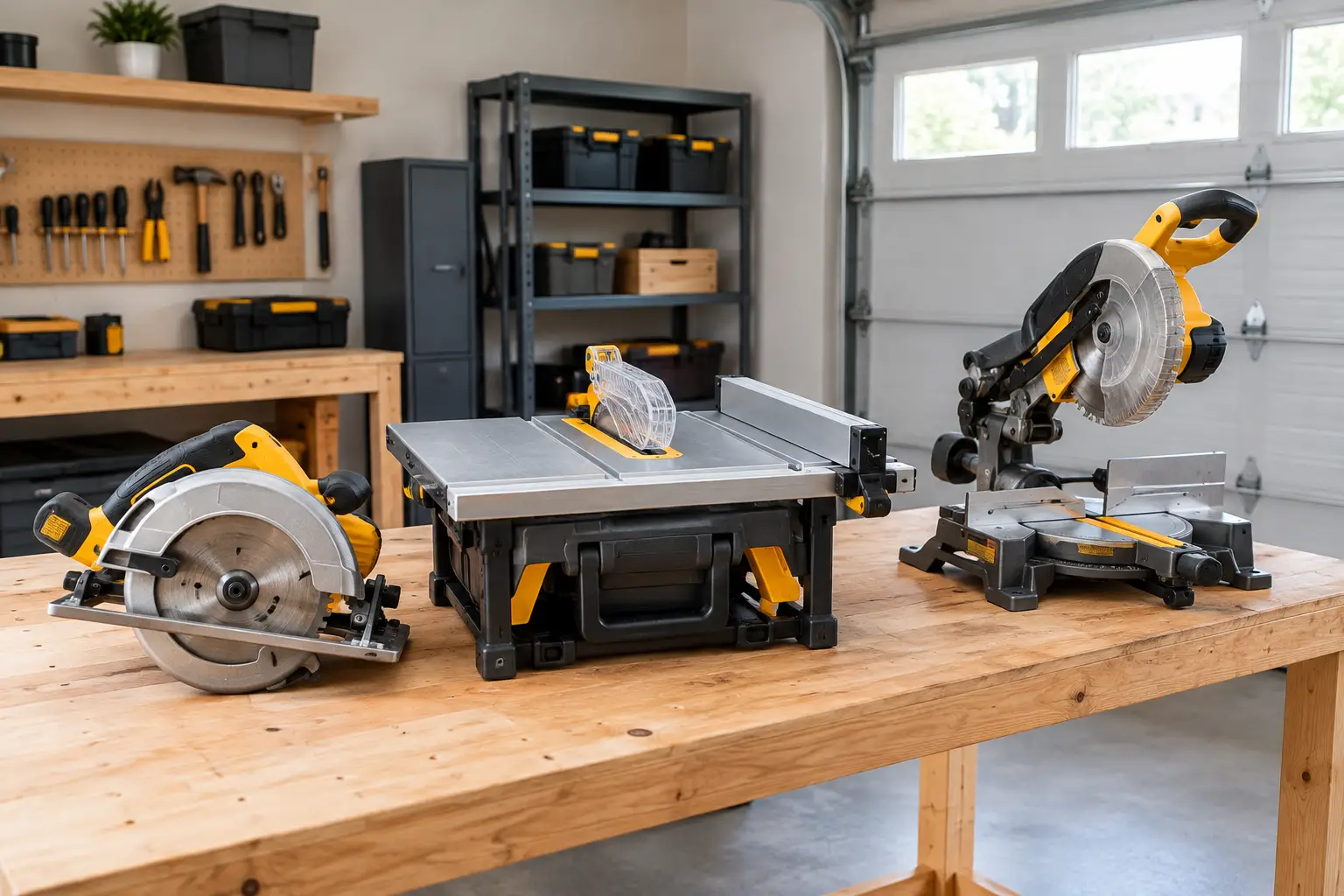
Consider a small garage workshop with a jobsite table saw, benchtop planer, router table, random-orbit sander, and miter saw.
Trying to run every machine through one collection system may seem convenient, but it can force you to compromise between the needs of small-port tools and larger woodworking machines.
For many workshops, two collection paths make more sense.
Use a shop vacuum and compact separator for smaller tools. A vacuum-compatible separator with matching hose connections and a 5-gallon container works well for sanding, handheld routing, and general cleanup.
Use a dust collector and appropriately sized cyclone for larger machines. A collector with a compatible 4-inch connection and a 20- to 30-gallon bin can be a practical starting point for a table saw, planer, and router table. Confirm the collector’s actual airflow and the separator’s specifications before choosing the equipment.
This two-system approach allows you to use the right type of equipment for each task without installing permanent ductwork throughout the garage.
It also makes storage easier. You can roll the larger collector beside the machine in use, then move it back into a corner when the garage needs to accommodate a vehicle.
The best configuration will depend on the machines you own, how often you use them, and how much space you can dedicate to dust collection.
Measure Before You Buy
In a small shop, physical dimensions are just as important as airflow specifications.
Measure the separator’s footprint, its total height with the hoses attached, and the space needed to remove the collection bin. Check whether the cart can pass between your workbench, table saw, and parked vehicle.
Think about where the hoses will go when the collector is not in use. A system that works well during a cutting session should not make it difficult to walk through the garage or access other tools.
If you plan to move the collector frequently, consider the cart’s wheels, handle position, and stability when the bin is full.
A separator earns its place in a small workshop when it protects the collector’s filter, keeps cleanup manageable, and fits the way you actually use the space.
Dust Separator Sizing Checklist
Before purchasing a separator, work through this checklist:
- Identify your collector: Determine whether you are using a shop vacuum or a dust collector.
- Check the airflow requirements: Match the separator to the collector’s operating range, not just its advertised horsepower.
- Verify the connections: Confirm inlet diameter, outlet diameter, hose size, and any required adapters.
- Choose a practical bin capacity: Consider how much dust and debris your tools produce during a typical session.
- Check the container seal: Make sure the lid and gaskets fit properly and the container can withstand the system’s pressure.
- Plan the layout: Measure the available space, hose routes, and clearance needed to empty the bin.
- Protect against fine dust: Use suitable filtration and maintain the collector, hoses, and machine hoods.
If you are unsure between two separator sizes, start by checking the manufacturer’s compatibility guidance. The larger model is not necessarily better if your collector cannot supply the airflow it requires.
Frequently Asked Questions
What size dust separator do I need for a shop vacuum?
For most compact shop-vac systems, a separator designed for approximately 1.5-inch to 2.5-inch vacuum connections is a practical starting point. A 5-gallon bucket keeps the system compact. Always check the separator’s airflow requirements and compatibility with your vacuum.
What size dust separator works with a 4-inch dust collector?
Look for a cyclone designed for the airflow range of your dust collector and compatible with its 4-inch ductwork. Some models specify a minimum operating airflow of around 350 CFM, but requirements vary. Verify the manufacturer’s specifications before purchasing.
Is a bigger dust separator always better?
No. A larger container reduces how often you empty it, but a larger cyclone may not work properly with a smaller collector. Match the separator’s design and connection sizes to your equipment, then choose a container that suits your workload and available space.
Can I use one dust separator for all my woodworking tools?
Sometimes, but not always. A shop vacuum and a dust collector have different airflow characteristics. For many small garage workshops, a compact vacuum separator for handheld tools and a larger cyclone for machines such as a table saw or planer provide a more practical solution.
Does a dust separator remove all fine wood dust?
No. A separator is primarily intended to remove debris from the airstream before it reaches the collector’s main filter. Fine airborne particles can remain. Use appropriate filtration, maintain the collection system, improve dust capture at the tool, and wear suitable respiratory protection when needed.
Final Recommendation
The right dust separator for a small shop is the one that matches your collector, maintains adequate airflow for your tools, and provides enough storage capacity without taking over your workspace.
For occasional sanding and handheld work, a compact shop-vac separator with a 5-gallon container is often sufficient. For a table saw or benchtop planer, a compatible cyclone designed for a dust collector is generally the better choice.
Start with your largest dust-producing machine, verify the collector and separator specifications, and measure the space available in your garage. That approach will help you choose a system that works efficiently without spending money on equipment that is too restrictive, unnecessarily large, or difficult to store.


Leave a Reply