
As an Amazon Associate I earn from qualifying purchases.
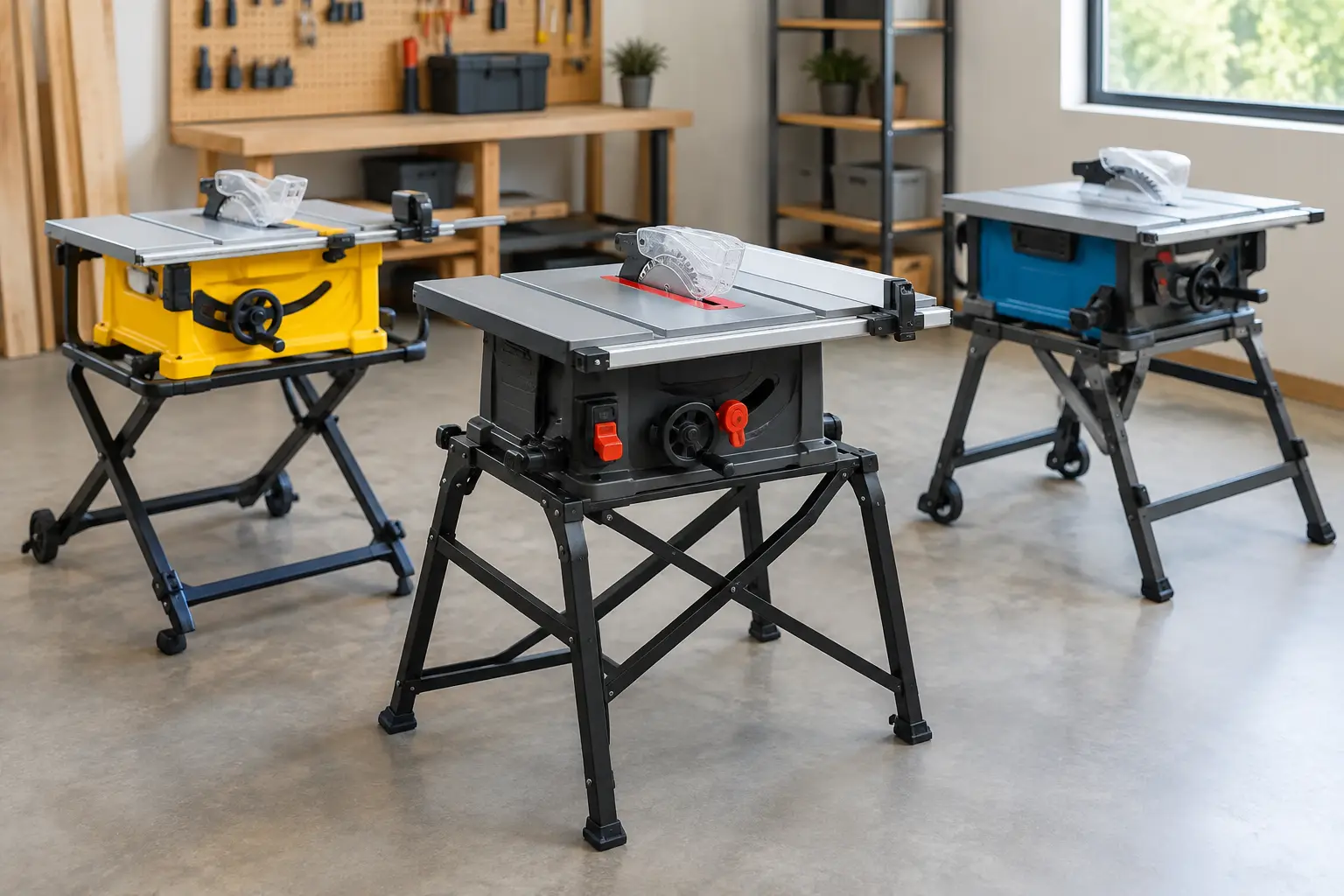
A table saw can be one of the most useful tools in a small garage workshop, but its stand can make the difference between a practical setup and a machine that takes up valuable floor space all week. The best compact table saw stands make it easier to move a saw into position, work safely, and store the equipment when you need room for a vehicle or another project.
For a one-car garage, the right stand should do more than support the saw. It should fit your storage area, keep the machine stable during cuts, and make setup simple enough that you actually use the saw instead of avoiding the hassle of moving it.
Not every folding stand has wheels, and not every rolling stand is designed for every table saw. Some models are made for specific saws, while a custom mobile base may work better for a machine that stays in one workshop. The key is choosing a stand that matches your saw and the way you use your space.
Best Compact Table Saw Stands at a Glance
| Table Saw Stand | Best For | Main Advantage | Main Limitation |
|---|---|---|---|
| DEWALT DW7440RS | Compatible DEWALT portable saws | Rolling mobility | Compatibility is limited to approved saw models |
| Bosch GTA570 | Bosch GTS18V-08 owners | Lightweight, folding design | No built-in rolling wheels |
| SKIL SPTA70WT-ST | Compatible SKIL saw owners | Lightweight aluminum construction | Designed for a specific saw |
| Milwaukee 48-08-0561 | Milwaukee M18 FUEL 2736 owners | Lightweight steel construction | Not a universal table saw stand |
| Bosch GTA500 | Compatible Bosch setups | Dedicated saw-and-stand system | Verify the exact saw and mounting requirements |
| Universal mobile base with locking casters | Workshop saws that rarely leave one bay | Flexible parking and layout | Requires careful sizing and installation |
| Shop-made folding or rolling base | Custom small-shop layouts | Can be designed around available space | Requires construction and stability checks |
Important: These options include both factory stands and workshop-built alternatives. They are not interchangeable. Before purchasing, confirm that the stand is approved for your exact saw model and that its mounting system supports the machine securely.
1. DEWALT DW7440RS — Best for Moving a Compatible DEWALT Saw
The DEWALT DW7440RS is worth considering if you own one of the compatible portable table saws identified by DEWALT. Its rolling design addresses a common problem in small garages: moving a saw without repeatedly lifting the entire machine.
For a workshop that changes configuration throughout the week, rolling mobility can be more useful than saving a few inches of folded width. You can move the saw away from a wall, position it for a cut, and return it to its designated parking area when the work is finished.
Why it makes sense in a small shop
A rolling stand can reduce the physical effort involved in rearranging a garage. This is especially useful when the table saw shares space with a vehicle, workbench, storage shelves, or a dust collection system.
The main consideration is the space required to maneuver the saw. A stand may roll easily in a straight line but still need additional room to turn around shelves or other equipment.
Before buying, measure the intended storage location and check whether the saw can remain mounted during storage and transport according to the manufacturer’s instructions.
Compatibility to check
DEWALT’s documentation identifies the DW7440RS for the DW744, DW744X, and DW745 table saws. Do not assume that every newer DEWALT jobsite saw will fit simply because it comes from the same manufacturer.
Best for: Owners of compatible DEWALT portable table saws who regularly move their equipment around a garage or workshop.
2. Bosch GTA570 — Best Lightweight Folding Stand
The Bosch GTA570 is a folding table saw stand designed for the Bosch GTS18V-08 cordless table saw. Its lightweight, all-steel construction makes it a practical option for users who need a simple stand that can be carried and stored without a large wheeled frame.
Bosch lists the stand at approximately 13.7 pounds and describes a folding design intended for quick setup and storage. These characteristics make it particularly interesting for a compact garage where a stand needs to disappear against a wall or fit into a limited storage area.
Why it works for a compact workshop
The GTA570 prioritizes portability rather than rolling convenience. You can fold it flat when it is not needed, which may make it easier to store alongside other tools.
That design is useful if you typically move your saw only a short distance or remove the saw from the stand between projects. However, carrying a saw and stand is different from rolling an assembled machine across a driveway.
Before selecting it, consider how frequently you move your saw and whether you are comfortable separating the equipment for transport.
What to know before buying
This is not a gravity-rise rolling stand. It uses a folding scissor-style design, and Bosch identifies the GTS18V-08 as the compatible table saw model.
Best for: Bosch GTS18V-08 owners who value low stand weight, straightforward setup, and flat storage.
3. SKIL SPTA70WT-ST — Best for a Compatible SKIL Table Saw
The SKIL SPTA70WT-ST is an aluminum table saw stand designed for the SKIL SPT99T. If you already own that saw, using its intended stand is a sensible starting point because the mounting system and overall setup are designed around the machine.
In a small workshop, the appeal of a lightweight stand is straightforward: less weight to manage when rearranging equipment and fewer bulky components competing for storage space.
Where this stand fits best
A folding stand can be useful when the table saw is brought out for weekend projects and stored afterward. It also makes sense in a garage where the available floor space changes depending on whether the vehicle is parked inside.
However, lightweight construction alone does not guarantee the best solution for every workshop. You still need to consider the complete saw-and-stand package, including how it is carried, where it rests when folded, and how much space remains for cutting long boards.
Check the exact saw model
The SPTA70WT-ST should not be treated as a universal stand. Confirm the model number on your saw and the current manufacturer’s compatibility information before ordering.
Best for: Woodworkers who own the compatible SKIL saw and want a dedicated folding stand for occasional or regular garage use.
| Table Saw Stand | Best Feature | Check Price |
|---|---|---|
| DEWALT DW7440RS | Rolling mobility for compatible portable table saws. | View on Amazon |
| Bosch GTA570 | Lightweight folding design for the compatible Bosch GTS18V-08. | View on Amazon |
| SKIL SPTA70WT-ST | Lightweight aluminum construction for a compatible SKIL saw. | View on Amazon |
As an Amazon Associate, I earn from qualifying purchases.
4. Milwaukee 48-08-0561 — Best for Milwaukee Cordless Saw Owners
The Milwaukee 48-08-0561 Folding Table Saw Stand is designed for the Milwaukee M18 FUEL 8-1/4-inch table saw, model 2736. It uses an all-steel construction and a quick-attach latching system to keep the compatible saw secured during operation.
Milwaukee lists the stand at approximately 15 pounds. Its relatively simple folding design makes it worth considering for a workshop where portability and storage are more important than a permanent machine base.
Why cordless users may prefer it
Cordless table saws are useful when a project moves between the garage, driveway, and backyard. A folding stand helps preserve that portability without requiring a large rolling assembly.
The adjustable foot is another useful feature when working on a surface that is not perfectly level. Nevertheless, leveling the stand does not replace the need to set up the saw on a firm surface and check that the complete assembly is stable before cutting.
If you use your table saw primarily inside a small garage, also consider where you will store the battery, fence, blade accessories, and other components.
A platform-specific choice
The 48-08-0561 is not a universal stand. Milwaukee identifies it for the M18 FUEL table saw model 2736, so owners of other brands should not assume it will fit.
Best for: Milwaukee M18 FUEL 2736 owners who need a lightweight, folding support for a cordless table saw.
5. Bosch GTA500 — Best for a Compatible Bosch 4100-Series Setup
The Bosch GTA500 is another stand to investigate when choosing a support system for a compatible Bosch table saw. The important point is to evaluate the stand and saw as a matched setup rather than purchasing a stand based on brand name alone.
For a small workshop, a dedicated stand can simplify mounting and reduce uncertainty about how the machine attaches to its support. That can be more valuable than buying a generic stand that requires improvised mounting hardware.
What matters for a small garage
Look at the entire arrangement, not just the stand itself. A table saw’s fence rails, handles, power cord, and accessories may extend beyond the dimensions of the base.
A stand that appears compact when folded may still require a deeper storage area once the saw is attached. This is particularly important if you intend to park the assembly beside a vehicle or underneath a work surface.
Verify the model before purchasing
Bosch offers multiple stand designs, and their features are not identical. Confirm the exact GTA500 compatibility information and the mounting instructions for your particular saw before treating this as a suitable combination.
Best for: Bosch saw owners who want to evaluate a dedicated stand-and-saw arrangement instead of adapting an unrelated support.
6. Universal Mobile Base with Locking Casters — Best for a Permanent Workshop Bay
If your table saw rarely leaves the same corner, a low mobile base may be more practical than a folding jobsite stand. This approach is especially useful when a compact contractor-style saw or another workshop machine needs to move only far enough to clear a workbench or open a parking space.
A mobile base can be built around the dimensions of the machine and the available storage area. Depending on the design, it may allow the saw to sit at a useful working height while remaining easy to reposition.
Why a mobile base can save space
In a one-car garage, a table saw often needs a permanent parking location but not a permanent operating location. A mobile base allows the machine to move into the cutting area when needed and return to a marked position afterward.
You may also be able to coordinate the saw’s position with an outfeed table or assembly bench. That can make a small workshop more functional without requiring a larger machine.
What to check before choosing one
A universal base is not automatically compatible with every saw. Check the dimensions, weight rating, attachment points, wheel placement, and clearance around the machine.
Locking casters must be suitable for the total load, and the base must remain stable during operation. If the saw rocks, shifts, or rolls under pressure, stop using the setup until the problem is corrected.
Best for: Workshop owners who want to move a saw within a garage but do not need to transport it to different jobsites.
7. Shop-Made Folding or Rolling Base — Best for a Custom Small-Shop Layout
A shop-made base is worth considering when standard stands do not fit the available space or the way you work. It can be designed around a specific table saw, an existing workbench, and the parking location available in a one-car garage.
This is not necessarily the cheapest option once materials, casters, fasteners, and construction time are included. Its main advantage is flexibility: you can plan the base around the actual dimensions of your workshop instead of reorganizing the entire garage around a commercial stand.
Plan the layout before building
Start by measuring the saw, the intended parking area, and the space needed for the longest boards you expect to cut. Mark the machine’s operating footprint on the floor with painter’s tape.
Consider the following:
- The base must support the saw securely and distribute its weight appropriately.
- The mounting arrangement must prevent the machine from shifting or tipping.
- The wheels must be rated for the complete assembly.
- The locking mechanism must keep the saw stationary during operation.
- The base must not interfere with the blade guard, fence, power cord, or dust port.
- The finished height must provide a comfortable working position without compromising stability.
A folding design may reduce the stored footprint, but hinges and folding legs introduce additional structural requirements. If you are not confident in the design, a properly rated commercial stand is the safer choice.
Plan for dust collection, too
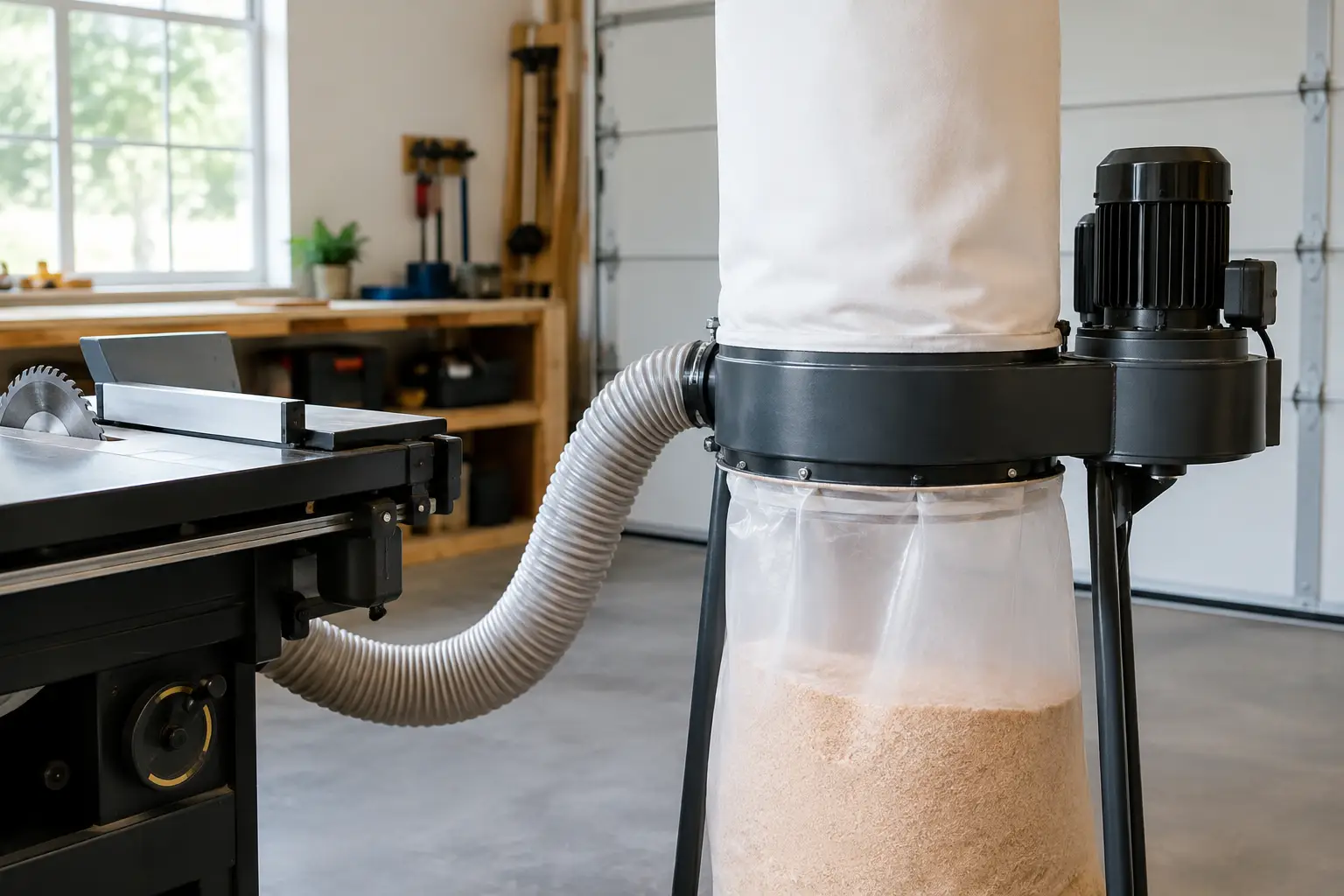
A custom base can also help organize hoses and accessories. For a small garage, consider how the dust hose moves when the saw is repositioned. It should not pull on the dust port, catch on the casters, or restrict movement.
You can plan the layout alongside your existing table saw dust collection setup for a small garage. If you use a shop vacuum, the dust collection hose size and length guide can help you evaluate hose routing and restrictions.
Best for: Experienced DIY woodworkers who need a tailored layout and can build a stable, properly supported base.
What to Look for in a Compact Table Saw Stand
Choosing the right stand becomes easier when you focus on how the complete setup behaves in your garage rather than comparing stand weight alone.
1. Measure the stored footprint
Measure the saw and stand in their actual storage configuration. Include handles, wheels, fence rails, and any accessories that remain attached.
Do not rely solely on a manufacturer’s folded dimensions if those measurements exclude the saw itself. The complete assembly is what must fit against your wall or beneath a work surface.
2. Decide whether you need wheels
Wheels are useful when the saw moves frequently across a garage floor or driveway. Larger wheels can handle some floor joints and minor obstacles more easily than small casters.
A lightweight folding stand may be a better option if you carry the stand separately and store it in a narrow space. Neither design is automatically superior; the right choice depends on how far and how often the saw moves.
3. Check stability and working height
The stand should sit firmly on the floor without rocking. Its mounting points must match the saw, and the completed assembly must remain stable when feeding stock.
Working height matters, too. A setup that is too low may be uncomfortable, while a poorly planned elevated arrangement can introduce unnecessary instability.
Always follow the manufacturer’s instructions for mounting, leveling, and operating the saw.
4. Consider long boards and sheet goods
A compact stand does not provide unlimited material support. Long boards and sheet goods may extend far beyond the tabletop, requiring a suitable outfeed table, roller support, or another properly positioned support system.
For a small shop, a folding outfeed surface can be particularly useful because it provides support during cutting without permanently occupying the floor.
Make sure auxiliary supports are positioned so they do not interfere with the saw or cause the workpiece to bind.
5. Check compatibility before ordering
Confirm the exact model number of both the saw and stand. Verify the mounting system, included hardware, and whether the saw is intended to remain attached during storage.
Do not assume that a stand designed for a similar-looking saw will fit your machine. An improvised attachment can create stability and safety problems.
How to Set Up a Table Saw in a One-Car Garage
A well-chosen stand is only part of the solution. The workshop layout should make it possible to move the saw into position, feed material safely, and put everything away afterward.
First, choose a parking location that does not block the garage door, electrical access, or other essential equipment. Next, determine the direction in which boards and sheet goods will travel through the saw. If possible, arrange the cutting lane so longer material can extend toward an open area when needed.
Before committing to the arrangement, use painter’s tape to mark the saw’s operating footprint and the expected material path. This makes it easier to identify conflicts with shelves, vehicles, and workbenches before moving heavy equipment.
Finally, plan how the saw will connect to power and dust collection. Cords and hoses should not cross walking paths or interfere with the stand’s wheels and locking mechanisms.
For woodworkers who prefer a portable machine, a battery-powered table saw for a small garage without a 220V outlet may also be worth considering. The appropriate choice depends on the saw’s cutting capacity, battery platform, and intended workload.
Frequently Asked Questions
What is the best type of table saw stand for a small garage?
The best type depends on how often you move the saw. A rolling stand is convenient when the machine must move regularly, while a lightweight folding stand can be easier to carry and store. A mobile base may be more suitable for a saw that stays in one workshop bay.
Are universal table saw stands worth buying?
They can be useful when a compatible stand is available for your saw, but universal mounting does not guarantee a secure fit. Verify the manufacturer’s compatibility guidance, mounting hardware, working height, and stability before buying.
Can I leave my table saw attached to its stand when storing it?
That depends on the specific stand and saw. Some systems are designed to remain assembled during storage, while others are intended to be separated or folded in a particular way. Follow the manufacturer’s instructions and account for the complete assembly’s size and weight.
Do I need a rolling stand for a one-car garage?
Not necessarily. A rolling stand is helpful if you regularly move the saw between storage and cutting positions. If you can carry a lightweight stand or store the saw in a dedicated area, a folding design may work just as well.
How much space should I leave around a table saw?
There is no single clearance measurement suitable for every workshop. You need enough room to feed the longest stock you plan to cut, control the workpiece, and operate the saw without obstacles. Account for infeed, outfeed, and side clearance, and use additional support for long or heavy material.
Can I build my own mobile table saw base?
A custom base can work if it is properly designed, securely attached, and rated for the complete machine. Use suitable materials and casters, prevent unwanted movement, and verify stability before operating the saw. If you cannot ensure a secure design, choose a manufacturer-approved stand.
Final Verdict: Choose the Stand That Fits Your Workshop
The best compact table saw stand is the one that supports your exact saw, fits its storage location, and makes it easy to work safely in the available space.
For compatible DEWALT and Milwaukee saws, their dedicated rolling or folding stands offer a straightforward starting point. The Bosch GTA570 and SKIL SPTA70WT-ST are options to consider when you own their respective compatible saws and want lightweight storage. A mobile base or shop-made solution may suit a workshop where the saw stays in one area but needs to move occasionally.
Before buying, measure the complete stored setup, confirm compatibility, and plan your infeed and outfeed space. In a one-car garage, a stand that makes the saw easy to set up and put away can be more valuable than one that simply looks compact in a product photograph.

Leave a Reply