As an Amazon Associate I earn from qualifying purchases.
A garage patio heater can make a cold one-car workshop usable for short evening projects, but it is not a plug-and-play purchase. The heater has to work around lumber racks, dust-producing tools, extension-cord limits, vehicle storage, and the fact that a garage is often less insulated than any room in the house. In a compact shop, the safest heater is usually the one that gives you enough warmth without adding a combustion source, a trip hazard, or another item competing for floor space.
For most hobby woodworkers, a properly mounted electric infrared heater is the practical starting point. Propane patio heaters may produce more dramatic heat, but they bring ventilation, clearance, moisture, and carbon-monoxide concerns that make them a poor fit for an enclosed garage. The label on the heater and the conditions in your shop matter more than the BTU number on the carton.
Start With the Garage, Not the Heater
A patio heater is often bought to solve a comfort problem, but the garage itself determines whether it will work. A 150-square-foot insulated detached garage with an 8-foot ceiling behaves very differently from a drafty 400-square-foot attached garage with an uninsulated door and exposed framing.
Before comparing models, look at the building envelope. Weatherstripping the garage door, sealing obvious air gaps, insulating the ceiling, and adding a door sweep can reduce heat loss more effectively than stepping up to a larger heater. This is especially true in a one-car shop, where the large garage door is usually the weakest thermal surface.
Also consider how you use the space. If you stand at a workbench for an hour while assembling cabinets or sharpening tools, radiant heat aimed at that zone can feel effective without heating the entire room. If you need to keep the whole garage warm through a long weekend project, a small patio heater may be the wrong category altogether. A purpose-built, permanently installed garage heater may make more sense if the building, electrical service, and budget support it.
Why Electric Is Usually the Better Garage Patio Heater
Electric infrared patio heaters create radiant heat. Rather than trying to warm every cubic foot of cold air, they warm people and surfaces within their line of sight. That is useful in a garage with frequent door openings, because the warmth returns quickly once you are back in the heater’s coverage area.
A 1,500-watt, 120-volt heater draws 12.5 amps. That is close to the practical limit of a 15-amp circuit, particularly if lights, a dust collector, battery charger, or compressor are on the same branch circuit. A dedicated 20-amp circuit gives a 1,500-watt heater far more breathing room, but confirm the heater’s manual and your local electrical requirements before installation.
Electric models also avoid the combustion byproducts created by propane and natural gas. That does not make them risk-free. Wood dust can accumulate on heater housings and reflectors, cords can be damaged by rolling equipment, and improper clearance from lumber or cardboard can create a fire hazard. Still, electric heat removes one major complication from a tightly enclosed workspace.
→ See electric patio heater options on Amazon for wall-mounted, ceiling-mounted, and portable models.
| Heater type | Best use in a small garage | Main limitation |
|---|---|---|
| Wall- or ceiling-mounted electric infrared | Dedicated bench or assembly area | Heat is directional and requires proper clearance |
| Portable electric infrared | Occasional use where mounting is not possible | Takes floor space and needs a safe cord route |
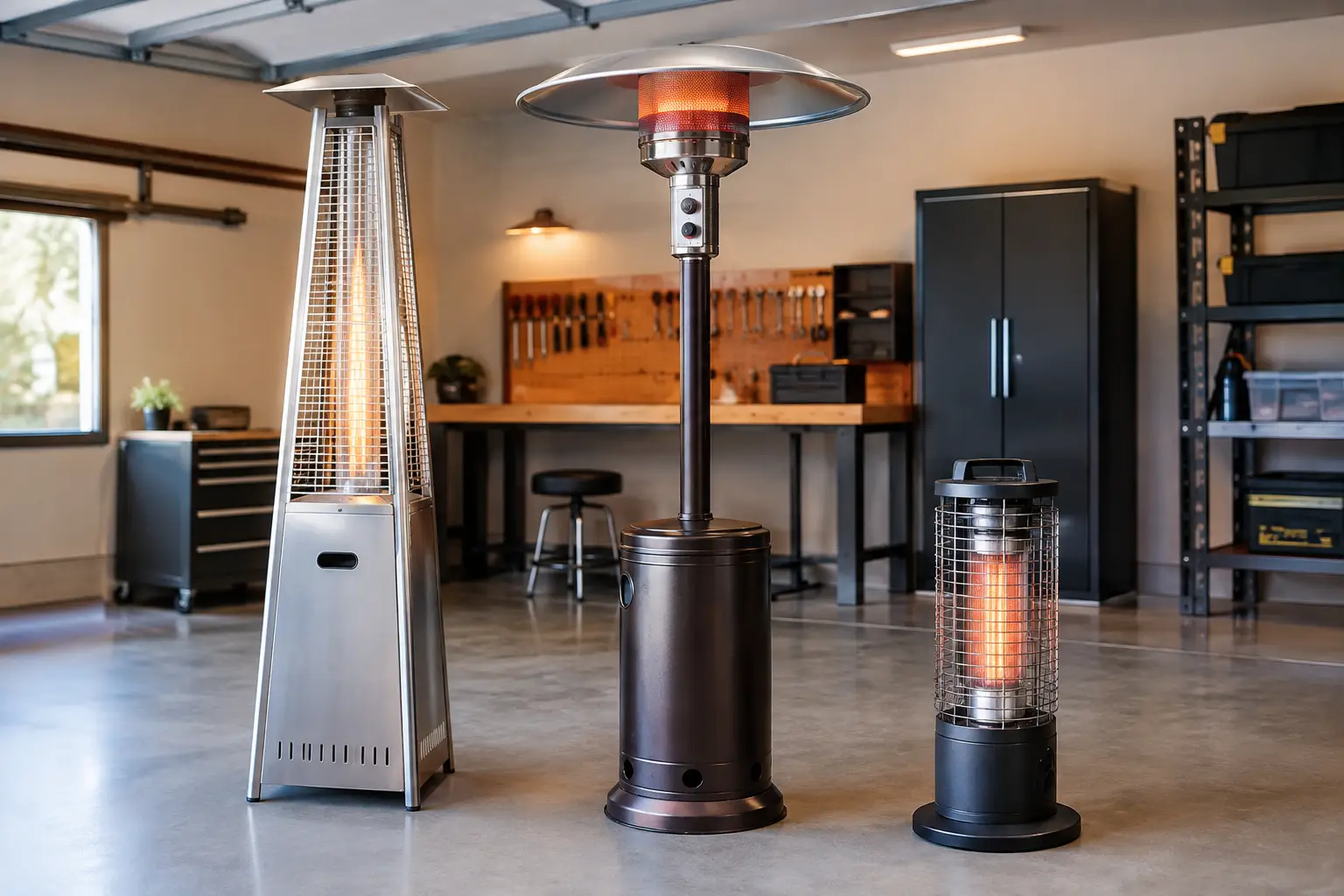
| Propane patio heater | Open-sided outdoor work areas | Not a good choice for an enclosed working garage |
| Vented gas garage heater | Frequent whole-shop heating | Higher installation cost and permanent space commitment |
The Problem With Propane Patio Heaters Indoors
A freestanding propane mushroom heater is designed primarily for open patios. It has a large footprint, a tall hot reflector, and an open flame or burner assembly. In a garage, it can be too close to rafters, overhead storage, wood framing, and the clutter that naturally accumulates around a small shop.
More critically, propane combustion produces carbon monoxide, carbon dioxide, water vapor, and other exhaust products. Running an unvented propane patio heater in an enclosed or poorly ventilated garage can create a serious carbon-monoxide hazard. Opening the garage door a few inches is not a reliable substitute for using equipment rated for the space and installed according to its instructions.
A carbon-monoxide alarm is worthwhile in an attached garage and near living areas, but it is an alarm, not a ventilation plan. Do not use a propane patio heater while spraying finishes, using flammable solvents, refueling equipment, or storing gasoline nearby. Those restrictions are not minor fine print in a woodworking shop.
Match Heat Output to the Way You Work
Patio-heater coverage claims can be optimistic because they assume favorable outdoor conditions or a person positioned directly in front of the heater. In a garage, ceiling height, insulation, drafts, and mounting angle affect comfort more than a broad square-footage claim.
For a compact shop, it is usually smarter to heat the active work zone than to chase an even temperature throughout the garage. Mounting an infrared unit so it covers the bench, outfeed table, or assembly area can make a 1,500-watt heater useful in a space where a portable fan heater would struggle. Keep in mind that the heater needs a clear path to you. A rolling lumber cart, open cabinet door, or sheet-goods rack can block radiant heat.
If your garage is below freezing for extended periods, a patio heater may be best viewed as supplemental heat. It can make setup, hand-tool work, glue-ups, and finish sanding more tolerable, but it will not turn an uninsulated garage into a conditioned shop. Wood glue, finishes, and batteries may need more stable temperatures than a directional heater can provide.
Floor Space and Mounting Clearance Matter
A pedestal-style heater can consume as much usable floor space as a shop vacuum. In a one-car garage, that is a poor trade when every aisle matters. It also creates a tip-over risk around extension cords, rolling miter saw stands, and vehicles moving in and out.
A wall- or ceiling-mounted unit is often the cleaner solution, but mounting is not simply a matter of finding an open patch of drywall. Follow the manufacturer’s minimum clearance requirements for the sides, top, front, and mounting surface. Those distances can be substantial, especially above the heater. Measure from the heater to stored lumber, ceiling joists, garage-door tracks, bins, and anything that could be moved into the heat path later.
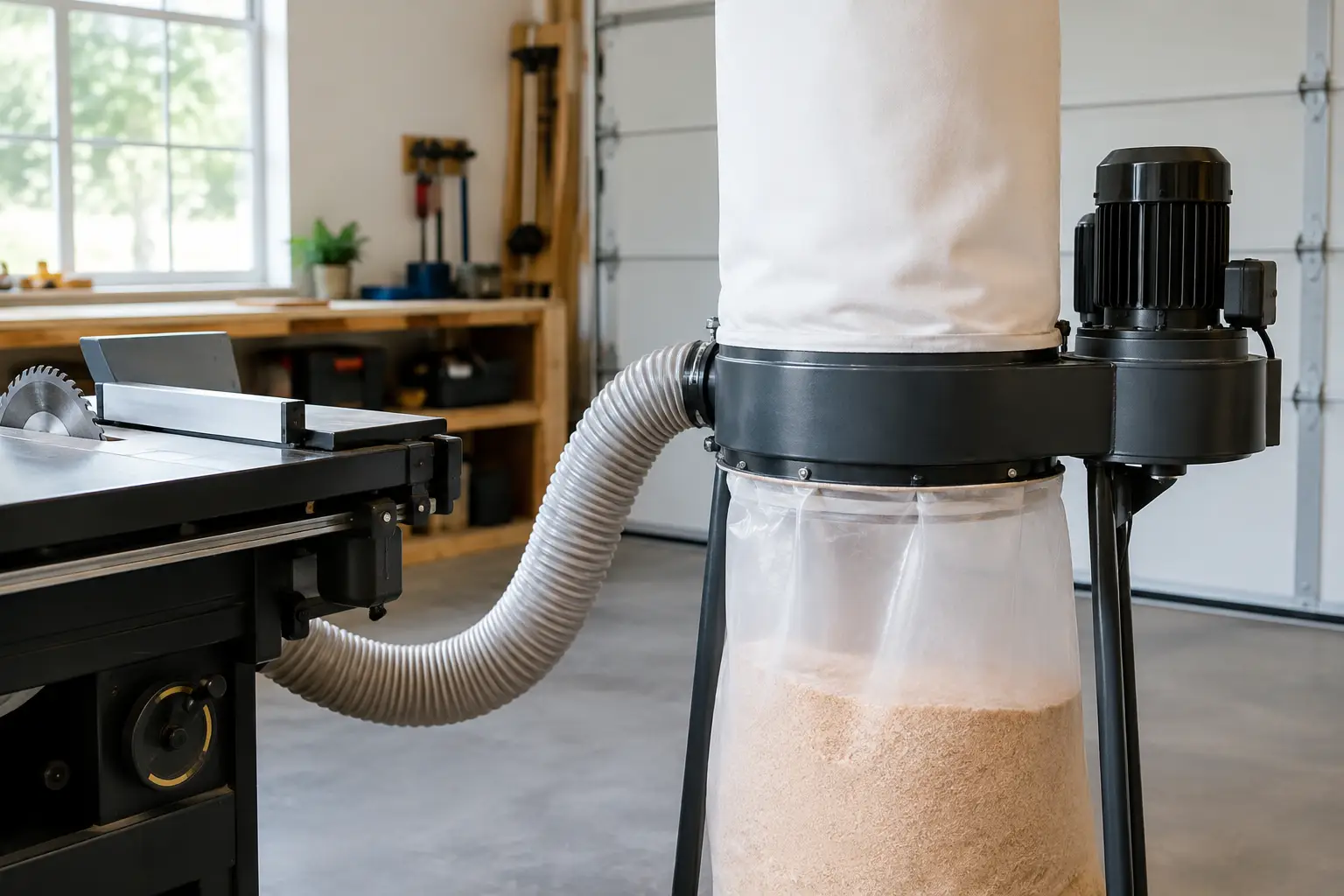
Do not mount a heater over a table saw, miter saw, or sanding station where airborne dust is concentrated. Even with a good dust collector, fine dust travels farther than the visible pile below the machine. Put the heater over a relatively clean standing area, then make cleaning its exterior and nearby surfaces part of regular shop maintenance.
Avoid Extension-Cord Heating Setups
A temporary cord is tempting when cold weather arrives, but high-wattage heaters are hard on undersized extension cords and overloaded power strips. The cord can become a trip hazard, a damaged connection can overheat, and the circuit may trip when another tool starts.
If a portable electric heater is your only realistic option, use a heavy-duty cord rated for the heater load and keep it as short as practical. Do not run it under rugs, through door gaps, or across areas where vehicles or rolling tools can crush it. A dedicated wall outlet near the intended heater location is the better long-term shop upgrade.
A Practical Setup for Most One-Car Shops
For occasional winter work, a 120-volt, 1,500-watt electric infrared heater mounted on a wall near the primary bench is a sensible baseline. Aim it toward the operator’s normal standing position, not directly at a machine, lumber rack, or garage door. Give it its own circuit where possible, preserve the required clearances, and shut it off before leaving the shop.
For a larger or colder garage, improve insulation and air sealing before buying a more powerful patio heater. If you routinely need full-shop heat, consult a qualified installer about a vented, purpose-built garage heating system. It costs more upfront, but it may be safer and more effective than trying to force an outdoor appliance to do an indoor job.
The best heating choice is the one that fits your work zone, electrical capacity, and storage layout without asking you to ignore safety rules. A warm bench is useful. A heater that crowds your workflow, overloads a circuit, or sits too close to sawdust and lumber is not.
Frequently Asked Questions
Can you use a patio heater in a garage?
Only if the specific heater is approved and designed for that application. Standard outdoor propane patio heaters should not be used inside an enclosed garage. Electric heaters do not produce combustion gases, but an electric patio heater is not automatically approved for indoor or garage use. Always follow the manufacturer’s instructions.
Is an electric infrared heater good for a small garage?
It can be useful for targeted heating in a small workshop, especially when you spend most of your time at one workbench or assembly area. Infrared heat is directional, so it may not provide uniform temperatures throughout the entire garage.
Can I use a propane patio heater in my garage?
A standard outdoor propane patio heater should not be used in an enclosed garage. Propane combustion produces carbon monoxide and other combustion byproducts. If you need fuel-fired heating, choose equipment specifically designed and approved for garage use and follow its installation requirements.
Is 1,500 watts enough to heat a one-car garage?
It depends on the garage and how you use it. A 1,500-watt heater may provide useful supplemental or spot heat, but insulation, ceiling height, climate, air leakage, and the number of times the garage door opens all affect performance. It should not automatically be considered sufficient for whole-garage heating.
Can I run a garage heater from an extension cord?
It depends on the heater and the manufacturer’s instructions. High-wattage heaters can place a substantial load on a circuit, while extension cords can create trip, damage, and overheating hazards. For regular use, a properly installed wall receptacle near the heater is preferable.
Should a garage patio heater be mounted on the ceiling?
Ceiling mounting can save valuable floor space in a small workshop, but only when the heater is designed for that installation. Follow the manufacturer’s mounting instructions and minimum clearances from the ceiling, walls, stored materials, and other combustibles.
Should I put a heater near my workbench?
A workbench can be a logical location for targeted radiant heat, but the heater should not be mounted so close to the bench, wood, cardboard, tools, or other materials that it violates the manufacturer’s clearance requirements. Keep the heater away from heavy dust-producing operations whenever practical.
Final Thoughts
The best garage patio heater for a small shop is not necessarily the largest or hottest model you can fit into the space.
Start with the garage itself. Seal obvious drafts, improve insulation where practical, and understand how much electrical capacity you actually have.
Then decide whether you need spot heating or whole-garage heating.
For occasional work at a single bench, an appropriately rated electric infrared heater can provide useful targeted warmth without adding combustion gases to the workshop. For regular whole-garage heating, a purpose-built garage heating system may be a better fit.
Most importantly, do not bring a standard outdoor propane patio heater into an enclosed garage simply because the weather is cold. Check the equipment’s intended application, follow the manufacturer’s clearance requirements, and treat electrical and fire safety as part of the heater purchase rather than an afterthought.
In a one-car workshop, every square foot matters. The right heater should make the shop more comfortable without becoming another obstacle, electrical burden, or fire hazard.

Leave a Reply