As an Amazon Associate I earn from qualifying purchases.
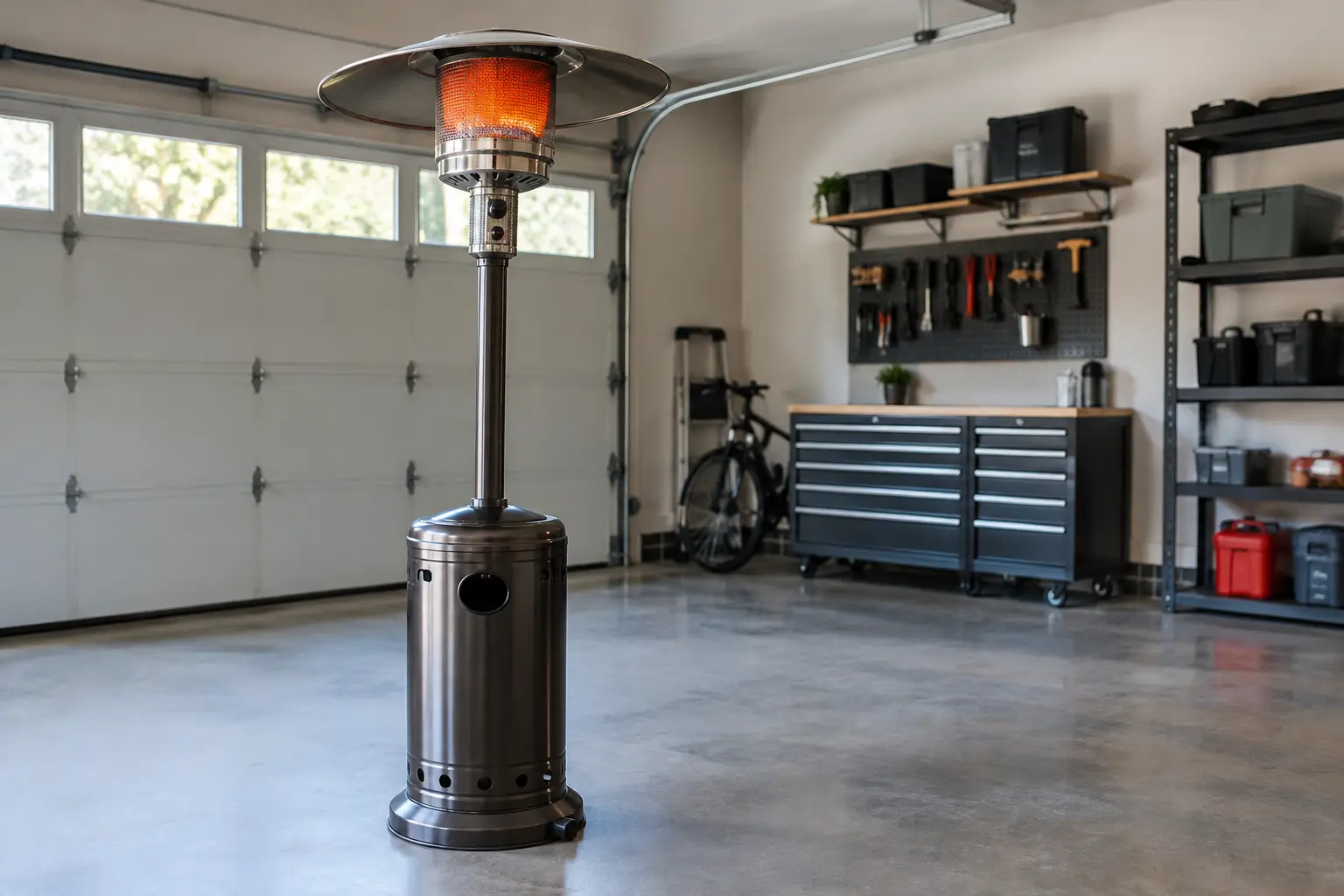
A cold one-car garage can make a Saturday project feel much longer than it should. When temperatures drop, a propane patio heater can look like an easy solution: roll it beside the workbench, connect the propane tank, open the garage door, and get back to work.
But are propane patio heaters safe in garages?
For a standard propane patio heater designed for outdoor use, the answer is no. You should not use it inside a garage, even with the garage door partially or fully open, unless the specific heater is explicitly listed and approved by its manufacturer for that type of indoor use.
That distinction is important because not every propane heater is designed the same way. Some portable propane heaters are specifically manufactured and listed for indoor or indoor/outdoor applications under defined conditions. A typical tall patio heater, however, is designed around outdoor operation.
The problem is not simply whether the heater produces enough heat. A propane appliance burns fuel, and combustion can produce carbon monoxide (CO), carbon dioxide, water vapor, and other combustion byproducts. A garage also contains combustible materials, ignition sources, tools, vehicles, and stored products that can make a fuel-burning appliance much riskier than it would be on an open patio.
For a small garage workshop, the safest approach is simple: use a heating appliance that is specifically rated for the environment where you intend to operate it.
Why a garage changes the safety equation
A patio heater is designed around an outdoor assumption: large amounts of open air can dilute combustion gases, and the heater has generous space around its reflector and burner. A compact garage violates both assumptions.
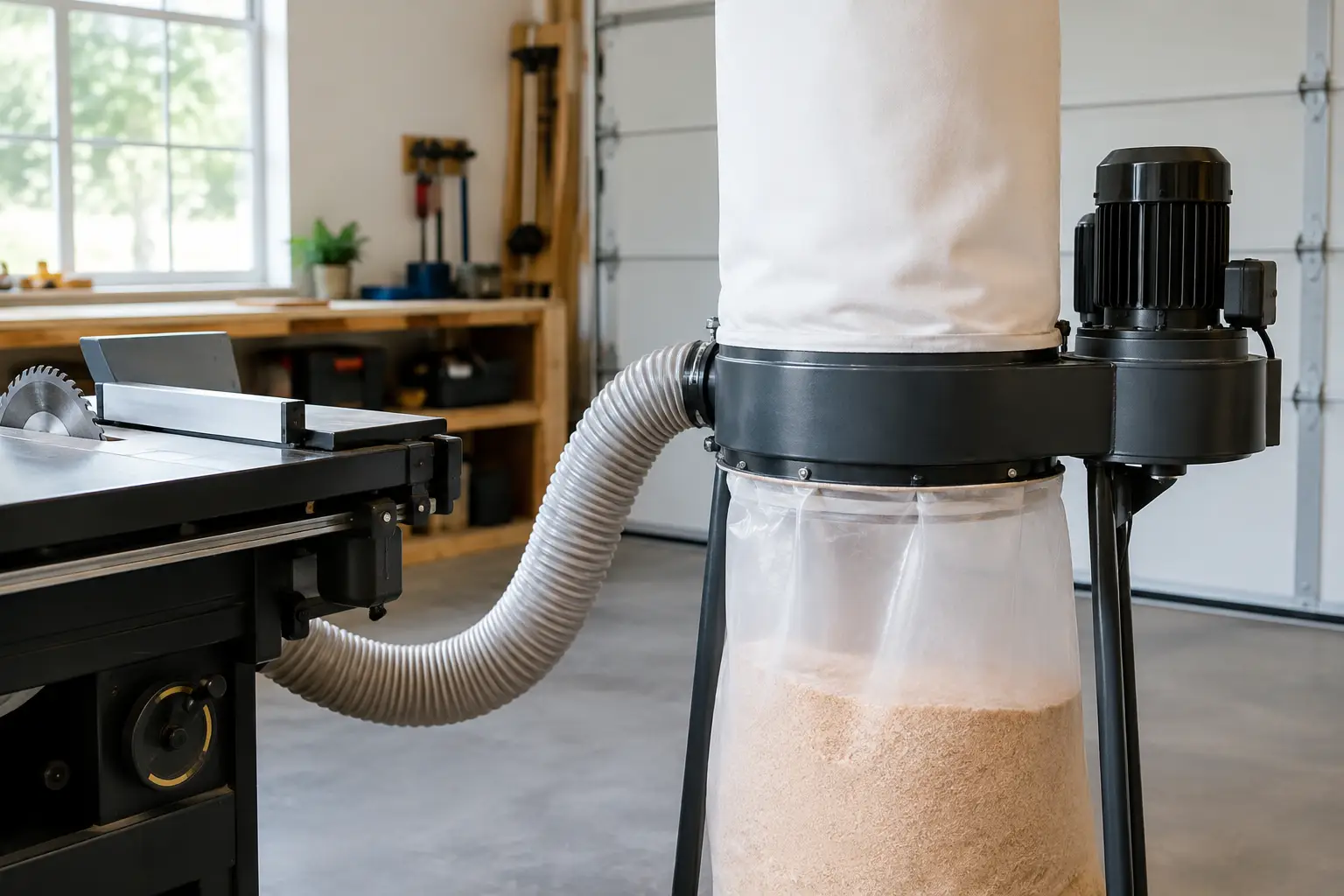
In a one-car shop, the heater may be only a few feet from shelving, lumber racks, cardboard boxes, a parked vehicle, paint cans, or the dust collector. Even if each item is not directly touching the heater, the radiant heat above and around the burner can reach materials that were never meant to sit in that heat zone.
More seriously, propane combustion can create carbon monoxide, or CO. Carbon monoxide has no color or odor, and exposure can cause headache, dizziness, confusion, unconsciousness, and death. You cannot judge CO risk by whether you smell propane or whether the flame looks normal. A blue flame is generally a sign of reasonably complete combustion, but it does not make an outdoor-rated heater safe for use indoors.
Opening the garage door is not a reliable workaround. Air movement in a garage is uneven. A partially open overhead door may provide fresh air near the opening while allowing combustion gases to collect higher in the shop or in a still corner behind storage. Wind direction, a service door, a running bath fan in an attached house, and even a dust collector can change airflow in ways that are difficult to predict.
Are propane patio heaters safe in garages with the door open?
No. A raised garage door does not convert a garage into an outdoor space, and it does not override the heater’s operating instructions. If the product manual says outdoor use only, running it in a garage with doors or windows open is still outside the approved use.
This distinction matters for more than liability language. Heater clearance requirements are based on tested operating conditions. The manufacturer may require several feet of clearance above the reflector and around the unit, plus a stable, noncombustible surface. A low garage ceiling, open rafters, stored materials, and a crowded machine layout make those requirements hard to maintain.
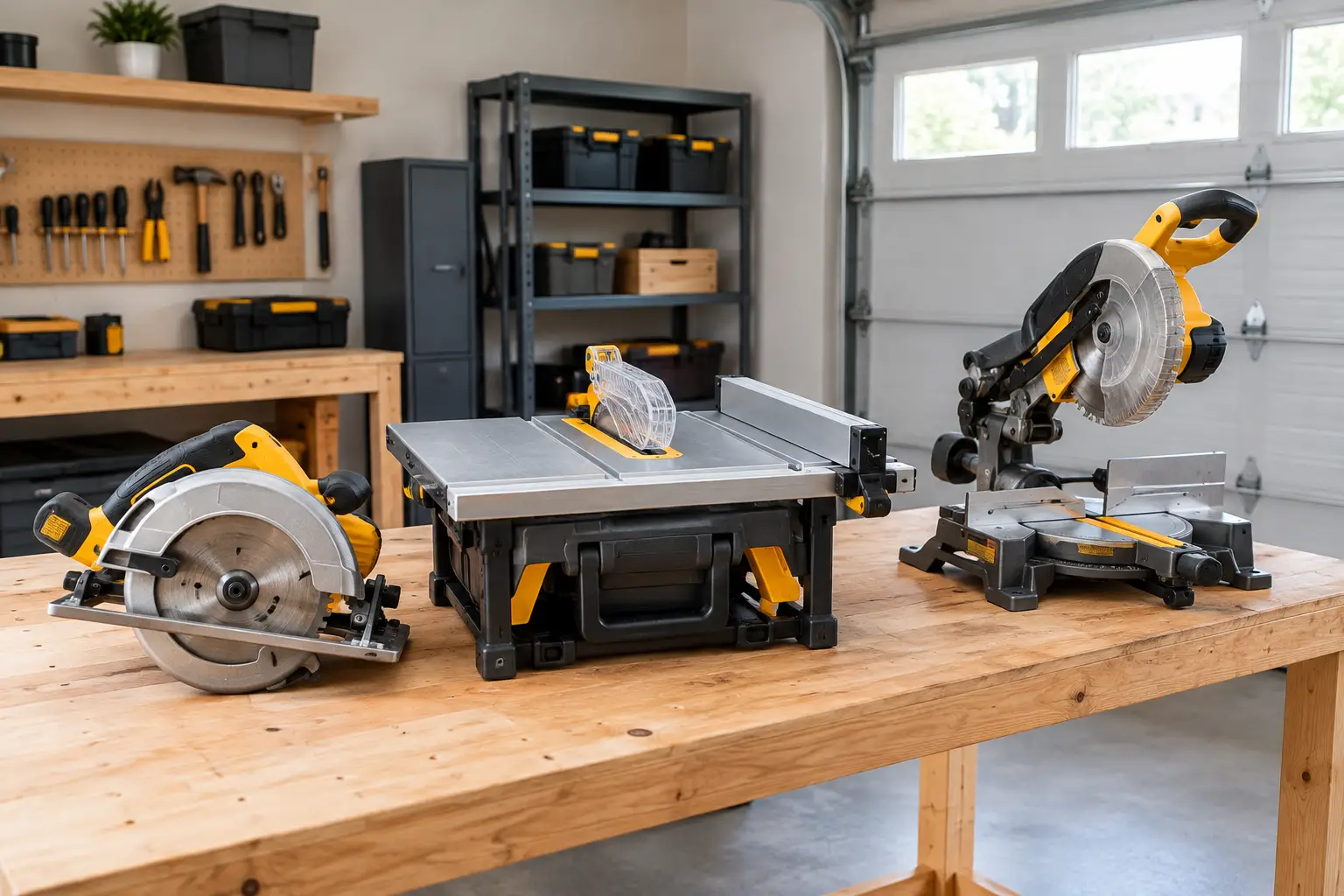
A common small-shop scenario is placing the heater near the center of the floor, then moving it aside when it is time to use the table saw or miter saw. That creates another problem: portable patio heaters are tall, top-heavy, and connected to a fuel cylinder. A hose can become a trip hazard, while repeated repositioning increases the chance of tipping the unit or placing it too close to a combustible surface.
Carbon monoxide is only one of the hazards
Carbon monoxide gets the most attention because its consequences are severe, but it is not the only reason to keep a patio heater out of the garage.
Propane is heavier than air. If a connection leaks, propane can settle near the floor and collect in low areas instead of simply rising away. Garages contain plenty of potential ignition sources: water-heater or furnace equipment, vehicle electrical systems, battery chargers, switches, pilot lights, and sparks from tools. Never use a flame to check for a leak. A proper leak test uses a manufacturer-approved method, typically soapy water applied to connections while the cylinder valve is opened.
Garage shops also contain fuel sources that patios usually do not. Sawdust, solvent vapor, finish rags, aerosol cans, gasoline, and cardboard packaging all change the risk level. Fine wood dust is not automatically an explosive cloud in ordinary hobby-shop conditions, but allowing dust to accumulate around a hot combustion appliance is poor shop practice. The same applies to overspray residue, oily rags, and flammable finishing products.
Then there is moisture. Burning propane produces water vapor. In a cold garage, that added moisture can condense on tools, cast-iron tables, and cold metal surfaces. A heater may make the room feel more comfortable while contributing to rust on a table saw top, miter saw rails, hand tools, and stored fasteners. For a shop owner trying to protect equipment, that is an unwanted tradeoff even before safety enters the picture.
What to use instead in a compact garage shop
For an enclosed garage workspace, electric heat is usually the cleaner and more controllable choice. It produces no combustion gases at the point of use, adds no water vapor, and does not require a propane cylinder inside the work area.
The right electric heater depends on the garage’s insulation, electrical capacity, and how long you work. A small 120-volt portable heater can take the edge off in a tightly sealed, insulated workspace, but it will not quickly heat a cold, uninsulated garage. A 240-volt electric unit heater has far more useful output for regular winter shop use, although it requires a correctly sized dedicated circuit and may need professional installation.
Infrared electric heaters can be useful when you work mostly at one bench or assembly table. They warm people and nearby surfaces more directly than they warm the entire air volume, which can make sense in a space where the overhead door opens frequently. The tradeoff is that you need to remain in the heater’s effective zone, and clearance rules still matter.
Before buying a larger heater, address heat loss. Weatherstripping the overhead door, sealing obvious air gaps, insulating the ceiling or garage door where appropriate, and keeping the exterior door closed can make a modest heater perform better. In a small shop, reducing drafts often frees up more usable comfort than adding another 1,500 watts of heat.
→ Check Price: electric garage heaters on Amazon
Choose a heater rated for your intended indoor environment, and check its power requirements, required clearances, and safety instructions before buying.
If you already own a propane patio heater
A propane patio heater can still be useful for its intended job: heating an open patio, driveway work area, or outdoor gathering space. Keep it outdoors, upright, and away from doors, windows, roof overhangs, and combustible materials according to its manual.
Do not treat a carbon monoxide alarm as permission to run an outdoor heater in the garage. Every enclosed garage shop should have appropriate CO detection nearby, especially if the garage is attached to the home or contains fuel-burning appliances. But an alarm is a warning device, not a ventilation plan or a substitute for using equipment as listed.
Storage deserves the same caution. Propane cylinders should not be stored inside the house or in an enclosed garage. Keep cylinders upright outdoors in a well-ventilated location, protected from physical damage and excessive heat. Local fire codes and the cylinder supplier’s instructions may impose additional requirements, so follow those rules rather than relying on a convenient empty corner of the shop.
Build warmth into the shop plan
In a small garage, heating should support the workflow instead of competing with it. An electric heater mounted or positioned with correct clearances keeps the floor open for material handling, avoids another fuel source beside finishing supplies, and lets you warm the room without changing the air quality.
The most useful winter setup is rarely the biggest heater. It is a reasonably insulated shop, a heater sized for the actual space, clear working aisles, and a heat source you can run without second-guessing every time you start a project.
→ Check Price: compact electric heaters for a small garage workshop
Before choosing a model, make sure it matches your garage’s available voltage and circuit capacity. A standard 120-volt outlet cannot power every type of garage heater.
FAQ
Can I use a propane patio heater in my garage with the door open?
Not if the heater is designed for outdoor use only. Opening the garage door does not change the manufacturer’s rating or instructions. Only use a propane heater inside a garage when the specific model is explicitly listed for indoor use and you follow all manufacturer, ventilation, clearance, and local-code requirements.
Can I use a propane patio heater in a garage with the windows open?
Opening windows does not automatically make an outdoor-rated patio heater safe for garage use. Ventilation cannot replace the appliance’s required listing and operating instructions. If the heater is labeled for outdoor use only, keep it outdoors.
Do propane patio heaters produce carbon monoxide?
Yes. Propane combustion can produce carbon monoxide. The amount produced depends on the appliance, combustion conditions, maintenance, and operating environment. Because CO is colorless and odorless, you should never rely on smell or the appearance of the flame to determine whether an appliance is safe to use indoors.
Are any propane heaters safe for garages?
Some propane heaters are specifically designed and listed for indoor or indoor/outdoor use. They are different from conventional outdoor patio heaters. Check the exact model’s safety certification, owner’s manual, ventilation requirements, clearances, and local regulations before using one in a garage.
Is an electric heater better for a small garage workshop?
For many enclosed one-car workshops, an appropriately sized electric heater is a simpler choice because it does not produce combustion gases inside the workspace. However, the heater still needs proper clearance, a suitable electrical circuit, and installation according to the manufacturer’s instructions.
Can I store a propane tank in my garage?
Do not assume that a garage is an acceptable place to store a propane cylinder. Many patio-heater manufacturers specifically instruct users to store cylinders outdoors in a properly ventilated location. Follow the cylinder manufacturer’s instructions and local fire-safety requirements.
Does a carbon monoxide detector make a propane patio heater safe in a garage?
No. A CO detector is a warning device, not a substitute for using an appliance according to its listing and instructions. If a propane patio heater is rated for outdoor use only, a CO detector does not make it appropriate for garage use.
The Bottom Line
A conventional propane patio heater designed for outdoor use should not be used inside a garage, even if the garage door is open.
The biggest concerns are carbon monoxide, fire, propane leaks, combustible materials, and the fact that the appliance was not designed or tested for that environment.
If you want propane heat in a garage, choose a model specifically listed for indoor use and follow its instructions exactly. If you simply want a safer and simpler solution for a small garage workshop, an appropriately selected electric heater is often the better direction.
A warm workshop is useful. But the best heater is not the one that produces the most heat.
It is the one that is designed for the space, installed correctly, and lets you work without creating a new safety problem.
And if you already own a propane patio heater, keep it doing the job it was designed to do: heating your outdoor space.

Leave a Reply