
As an Amazon Associate I earn from qualifying purchases.
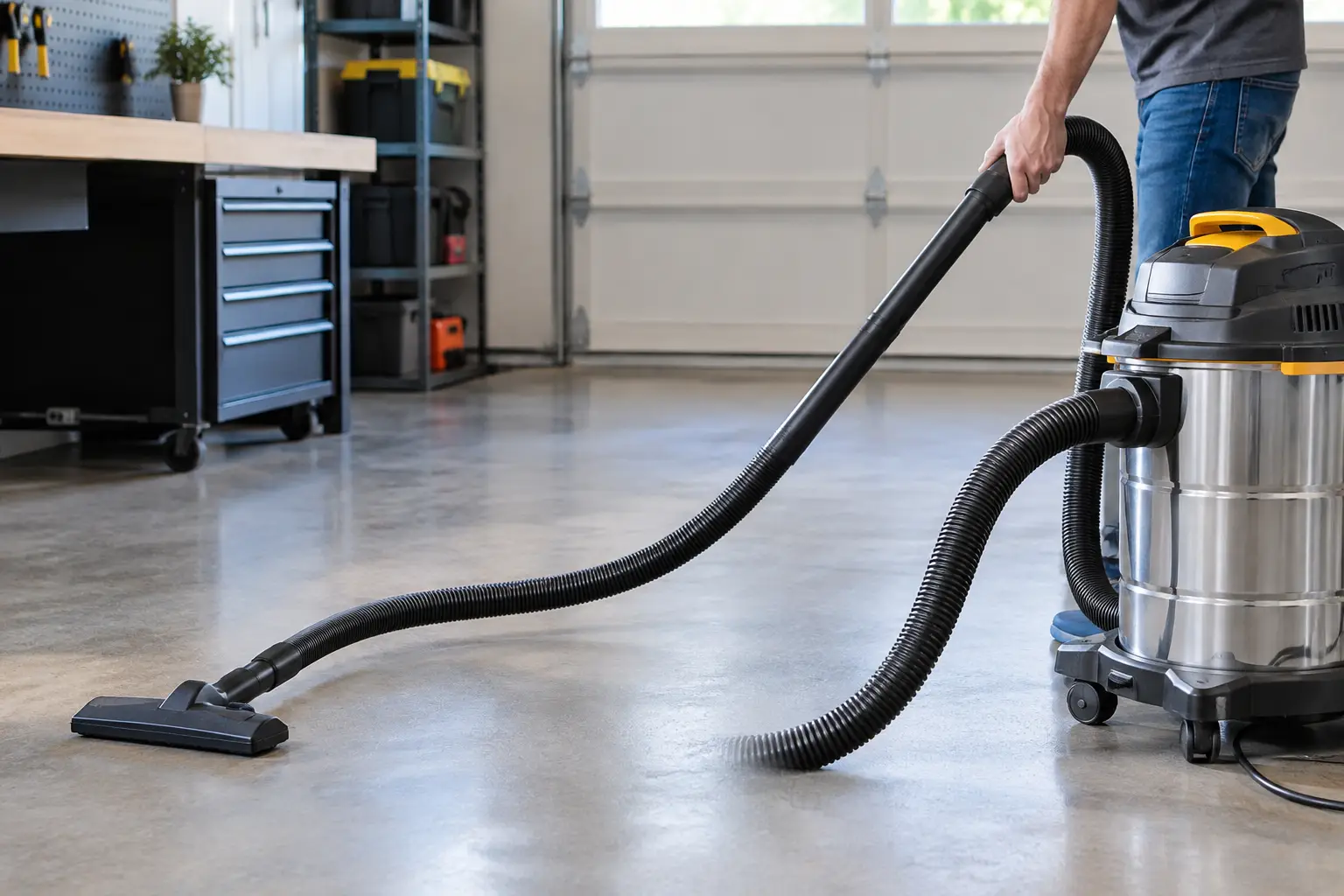
A shop vacuum that works well beside your workbench can feel noticeably weaker when you stretch the hose across a one-car garage. If you’ve noticed more sawdust escaping from a sander or chips collecting around a table saw, hose length could be part of the problem.
Yes, a longer hose can reduce airflow and weaken dust collection at the tool. But length isn’t the only factor. Hose diameter, internal corrugations, bends, adapters, leaks, and filter condition all affect how well your vacuum or dust collector performs.
In a small garage shop, the goal is to get enough airflow at the tool without filling the floor with hoses or buying equipment you don’t need. Here’s how to choose a practical hose length, identify airflow problems, and improve dust collection without wasting money.
Why a Longer Hose Reduces Airflow
Air doesn’t move through a hose without resistance. As it travels along the inside walls, friction and turbulence consume some of the pressure available from the vacuum or dust collector.
The longer the hose, the more resistance the system generally has to overcome. That can reduce the airflow reaching your tool, particularly when you’re using a narrow hose, several adapters, or a machine with limited suction capacity.
You might notice the difference when sanding a board, routing an edge, or cleaning chips from a table saw. The vacuum may still sound normal, but less debris reaches the collection container, and more dust escapes around the tool.
The important point is that hose length doesn’t have a fixed effect on every dust collection system. A 15-foot hose with a suitable diameter and gentle bends may perform better than a shorter hose that’s undersized, kinked, or clogged.
Shortening a hose can help, but it’s worth checking the entire setup before assuming length is the main problem.
Suction and Airflow Are Not the Same Thing
People often use the word suction to describe every aspect of vacuum performance. In practice, two measurements help explain what’s happening.
Static pressure describes the pressure difference a vacuum can develop to overcome resistance. Airflow, usually measured in cubic feet per minute (CFM), describes the volume of air moving through the system.
Shop vacuums typically develop relatively high static pressure and work well through smaller hoses. They’re useful for handheld sanders, routers, track saws, and general cleanup.
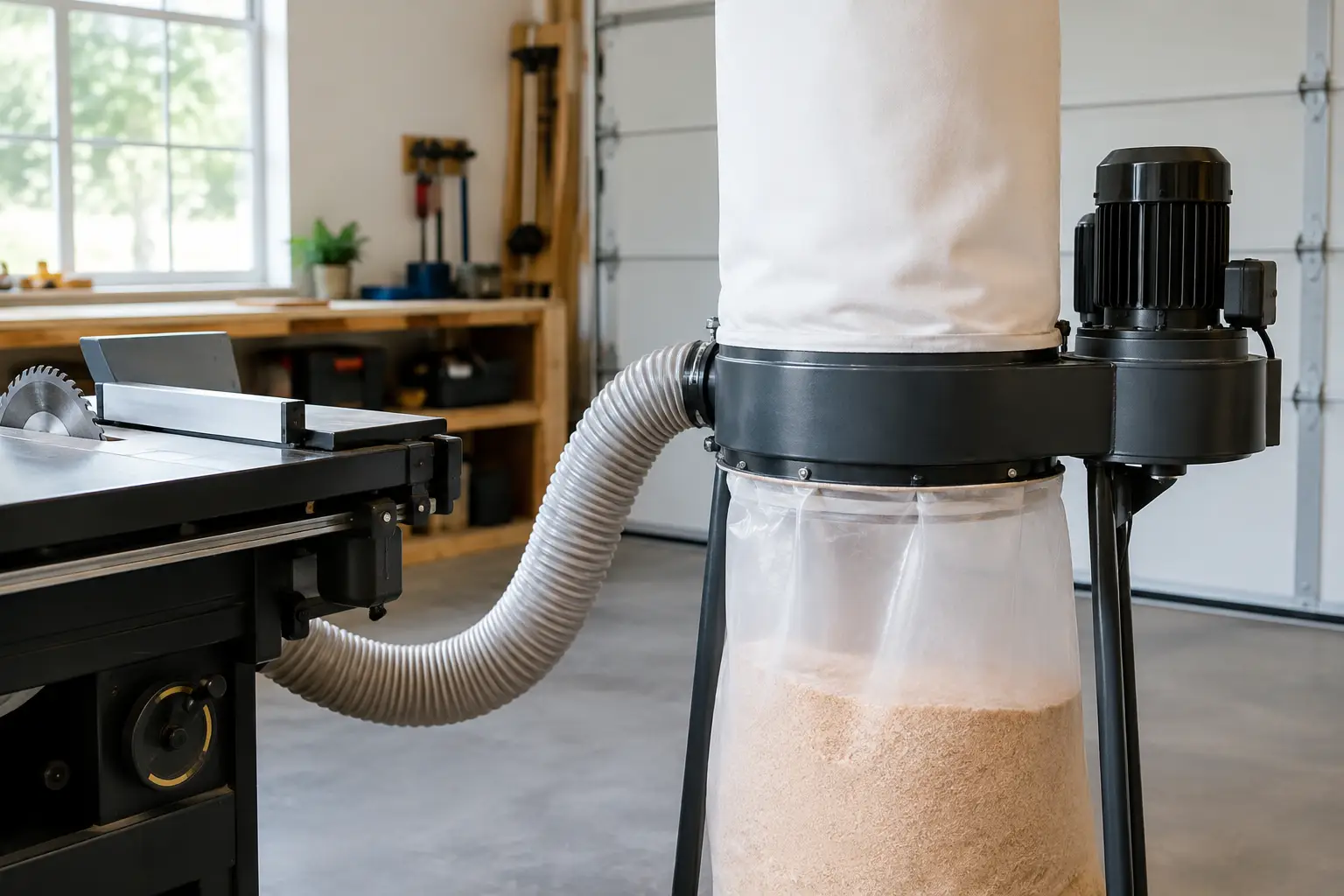
Dust collectors are generally designed to move larger volumes of air through wider hoses. They’re better suited to carrying larger wood chips and collecting debris from stationary machines designed for dust collection.
Both systems can lose airflow when you add excessive hose length or restrictive fittings. However, the effect depends on the machine, its fan performance, the hose diameter, and the resistance of the complete setup.
If you want to understand the difference in more detail, read my guide to CFM vs. suction for dust collectors.
Does Hose Length Affect a Shop Vac More Than a Dust Collector?
There’s no universal answer. A shop vacuum and a dust collector are designed for different operating conditions, so the same hose arrangement won’t affect them identically.
A shop vac may maintain useful pickup through a relatively long hose when cleaning the floor or collecting loose debris. Fine dust extraction from a sander is a different matter because the tool needs adequate airflow at its dust port.
A dust collector may struggle when a long, narrow hose restricts the airflow needed to carry chips away from a table saw or planer. The problem becomes more noticeable when the machine produces debris faster than the system can remove it.
For either setup, judge performance at the tool rather than relying only on the vacuum’s advertised specifications.
| Product | Best Use | Check Price |
|---|---|---|
| Shop-Vac 8-Foot x 2-1/2-Inch Hose | Replacing a damaged hose or reducing an unnecessarily long run. | Check Price on Amazon → |
| Shop-Vac 3-Piece Vacuum Hose Adapter Kit | Connecting compatible hoses and tool ports. | Check Price on Amazon → |
| Shop-Vac 2-1/2-Inch to 1-1/4-Inch Conversion Unit | Connecting a larger shop-vac hose to a smaller compatible tool port. | Check Price on Amazon → |
Hose Diameter Matters More Than Many Small-Shop Owners Expect
If you’re trying to improve dust collection, don’t focus on length alone. Hose diameter can make a substantial difference in airflow resistance.
A smaller hose generally creates more resistance for a given airflow than a larger hose of similar construction. That difference becomes increasingly important over longer runs.
The actual inside diameter matters, too. A hose labeled 2-1/2 inches won’t deliver the full benefit of that diameter if a restrictive adapter immediately reduces the opening to a much smaller size.
For a shop vacuum, use the largest hose diameter that is compatible with the vacuum and the tool you’re connecting. A 2-1/2-inch hose can be useful for general cleanup and larger debris, while many power tools require smaller connections.
For example, a sander may have a 1-1/4-inch or 1-7/8-inch dust port. In that situation, a larger main hose with a short, properly fitted adapter near the tool can be a sensible compromise.
For a dust collector designed around 4-inch connections, preserve that diameter through as much of the run as practical. Reducing the entire run to a smaller hose can add considerable resistance and limit the system’s ability to move air.
However, a larger hose isn’t automatically better for every application. Hose diameter must match the collector, tool port, and debris being collected. An unnecessarily large hose can reduce air velocity, while an undersized one can restrict airflow or clog when carrying larger chips.
My guide to dust collection hose size, length, and fit explains how to match hose dimensions to your equipment.
Don’t Ignore the Dust Port on the Tool
Sometimes the hose isn’t the main limitation.
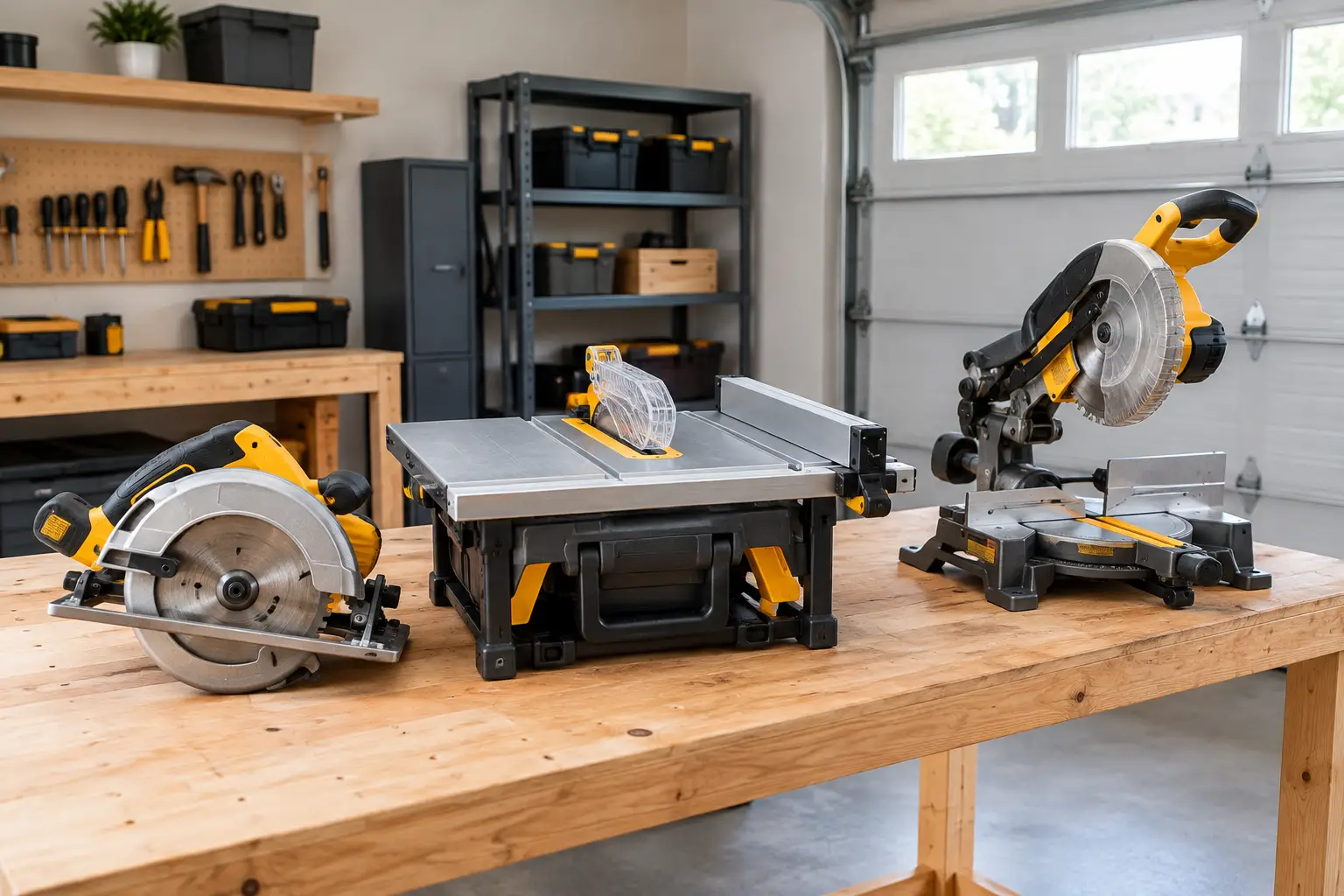
A miter saw, for example, can throw fine dust into the air even when connected to a reasonably powerful collector. The open cutting area and the shape of the factory dust hood can make it difficult to capture debris before it escapes.
A wider hose won’t necessarily fix that problem because the saw’s internal passages and collection hood may restrict how effectively dust enters the system.
Before buying a larger hose, inspect the tool’s dust port and hood. A better-fitting adapter, a more effective close-capture hood, or a shorter connection may provide a more noticeable improvement than replacing the entire hose.
Bends, Corrugations, and Leaks Add Up
Flexible hose is convenient in a garage that serves as both a parking space and a workshop. You can move a vacuum beside a sander, roll it toward a table saw, and put everything away when you’re finished.
The downside is that corrugated hose creates more airflow resistance than a comparable smooth interior. Tight bends, crushed sections, restrictive couplers, and unnecessary adapters can increase that resistance.
A gentle curve is usually manageable. A hose folded sharply behind a mobile workbench is a different story.
Before replacing your equipment, inspect the hose along its entire length. Look for sections that have collapsed, become kinked, or collected compacted sawdust. Check the cuffs and connectors for cracks or loose fits.
Air leaks can also interfere with performance. A poorly fitted connection may allow air to enter where it shouldn’t, while an open branch or improperly closed blast gate can divert airflow away from the machine you’re using.
The effect of a leak depends on its location and size, as well as the design of the collection system. Not every small leak will cause a dramatic loss, but fixing loose connections is a sensible first step.
For a compact garage shop, follow these basic rules:
- Keep the hose as straight as your workspace allows.
- Avoid sharp bends and crushed sections.
- Use the fewest practical adapters and reducers.
- Keep smaller-diameter tool connections as short as possible.
- Check that hose cuffs and fittings fit securely.
- Close unused collection branches when operating a machine.
You don’t need to eliminate every bend or install permanent ductwork to get useful results. The objective is to avoid unnecessary restrictions while keeping the system convenient to use.
Practical Hose Lengths for Compact Garage Shops
There isn’t one maximum hose length that works for every shop vacuum or dust collector. A powerful vacuum with a compatible hose may handle a longer run reasonably well, while a smaller collector can struggle with a shorter, restrictive setup.
The following lengths are practical starting points for a typical hobby workshop, not manufacturer specifications or guaranteed performance limits.
| Setup | Starting hose length | What to consider | |—|—|—| | Shop vac for sanders and handheld tools | 8–12 feet | Match the hose to the tool and keep reducers short. | | Shop vac for floor and bench cleanup | 10–15 feet | Extra reach is convenient, but check for kinks and filter restrictions. | | Dust collector connected to one stationary machine | 6–10 feet | Preserve the intended hose diameter and minimize restrictive fittings. | | Collector serving nearby machines | 10–20 feet per active run | Longer fixed sections may benefit from properly sized smooth-wall ducting. |
These ranges are useful for planning a layout, but they shouldn’t override the manufacturer’s instructions or the requirements of a particular machine.
A 20-foot hose may be perfectly practical for occasional cleanup, yet unsuitable for a tool that needs stronger, sustained airflow to capture fine dust. Conversely, a well-designed extraction system may accommodate a longer run without a serious problem.
The type of work matters, too. Picking up wood chips from the floor isn’t the same as capturing fine dust at the source while sanding.
If you use a shop vac mainly for cleanup, convenience may justify a little extra hose length. If you’re connecting a sander or a machine that produces substantial chips, prioritize effective collection at the tool.
How to Tell Whether the Hose Is Your Problem
Before buying a new vacuum or dust collector, run a few simple checks. They won’t give you a laboratory measurement of CFM, but they can help identify obvious restrictions.
1. Compare Airflow at the Hose and the Vacuum Inlet
Turn off and unplug the equipment before disconnecting the hose or inspecting internal components. Follow the manufacturer’s instructions for safe operation.
Once the system is properly reassembled and ready to run, compare its pickup at the hose end with its performance at the machine inlet, using the same operating conditions where practical.
If pickup improves noticeably when the hose is removed, the hose, adapters, or downstream connections may be restricting airflow.
This is a qualitative comparison, not a calibrated CFM test. An open machine inlet and a connected tool port don’t have identical operating conditions, so the result should be treated as a diagnostic clue rather than an exact measurement.
2. Inspect the Hose for Blockages
A hose can look fine from the outside and still contain a partial blockage.
Turn off and unplug the vacuum before checking for debris. Inspect the hose, cuffs, reducers, and any accessible passages for compacted sawdust, wood chips, or foreign objects.
Pay particular attention to narrow sections and adapters. A handful of chips can collect where a larger hose transitions to a smaller diameter.
Straighten any kinked sections and replace a hose that has become damaged or repeatedly collapses during use.
3. Check the Filter and Collection Container
A dirty filter can make a healthy shop vacuum seem underpowered. Fine sanding dust is especially troublesome because it can accumulate quickly and restrict airflow.
Check the collection bin or bag, clean or replace the filter as directed by the manufacturer, and inspect any separator for blockages.
If your system uses a cartridge filter for a small-shop dust collector, make sure it is appropriate for the material you’re collecting and is maintained according to the manufacturer’s instructions.
Don’t remove a required filter just to increase airflow. The correct filtration system protects the equipment and helps prevent collected dust from being discharged back into your garage.
4. Test the System While Using the Actual Tool
A vacuum that performs well during floor cleanup may not capture enough dust from a sander or miter saw.
Run the tool on a suitable piece of scrap material and observe where the debris goes. If dust escapes from the tool’s collection hood, the problem may involve airflow, hood design, or the way the tool directs debris.
If chips accumulate inside the hose, inspect for restrictions and confirm that the system is appropriate for the debris being collected.
Make comparisons under similar conditions. Changing the filter, hose, adapter, and tool position simultaneously makes it difficult to identify which change actually helped.
5. Change One Thing at a Time
If the setup still performs poorly, try a shorter hose run while keeping the same tool, collector, filter, and adapter arrangement wherever possible.
If collection improves, hose length or routing may be contributing to the problem. If performance changes very little, investigate other restrictions or the tool’s dust collection design before spending money on a larger vacuum.
This simple process can prevent you from replacing equipment when a short hose, a proper adapter, or a clean filter would have solved the problem.
Choose a Hose Layout That Fits Your Actual Workflow
In a one-car garage, dust collection has to work around more than woodworking equipment. You may need room for a vehicle, a rolling workbench, a folding miter-saw stand, and tools that move from one project to the next.
That makes a portable setup attractive, even if permanent ductwork could offer advantages in a dedicated workshop.
For many small garages, a rolling collector with a dedicated hose in the 8- to 10-foot range is a reasonable starting point. Position the unit beside the active machine, route the hose without sharp bends, and store it on a wall hook or cart when you’re finished.
The ideal length depends on where the collector can safely sit and how far you need to reach. Don’t choose a hose simply because it’s long enough to reach every corner of the garage from one fixed position.
If you use several machines, consider a short flexible connection at each tool and a properly sized smooth-wall main duct for longer fixed sections. This arrangement can reduce resistance while allowing you to move equipment around the shop.
Make sure the ducting, fittings, and collector are designed to work together. A long run of smooth duct isn’t automatically effective if the system has undersized branches, restrictive transitions, or inadequate airflow for the tool.
For a multipurpose garage, there’s also a practical safety consideration: don’t route hoses where they create a tripping hazard or interfere with moving a vehicle. A slightly shorter hose and a portable collector may be a better trade-off than a long hose stretched across the floor.
And remember that a more powerful motor isn’t always the best solution. If your current system has a kinked hose, a clogged filter, or several restrictive adapters, fix those problems first. Adding power to a poorly arranged system may cost more without solving the underlying issue.
How to Choose the Right Hose Before Spending Money
If you’re planning to replace or extend your hose, work through these questions first:
- What does the tool need? Fine dust extraction from a sander and chip collection from a table saw aren’t identical jobs.
- What diameter does the manufacturer recommend? Check the vacuum inlet, hose, tool port, and available adapters.
- How far does the collector actually need to sit? Measure the practical route around benches and other equipment instead of estimating across the garage.
- Can you shorten the restrictive part of the run? A longer main section with a short, suitable tool connection may work better than a long, narrow hose.
- Have you checked the existing system? A clogged filter, full bin, blocked separator, or damaged cuff can undermine performance regardless of hose length.
If you’re buying an extension, make sure it is compatible with your existing hose and doesn’t introduce a major reduction in diameter. Also check the manufacturer’s guidance on maximum hose length and approved accessories.
For a small workshop, spending a little time measuring and testing is often more useful than buying the longest hose available.
The Bottom Line: Does Hose Length Reduce Suction?
Yes, a longer hose generally increases airflow resistance and can reduce dust collection at the tool. But hose length is only one part of the system.
Diameter, corrugations, bends, adapters, leaks, filter condition, and the design of the tool’s dust port can all influence the result. That’s why shortening the hose doesn’t always solve a collection problem.
For most one-car garage shops, start with the shortest practical route, use a hose diameter suited to the equipment, keep adapters and tight bends to a minimum, and maintain the filter regularly.
If you’re unsure whether the hose is responsible, compare performance with a shorter run before buying a new collector. When the hose is no longer the limiting factor, focus on the tool’s dust port and the collector’s suitability for the job.
The best setup isn’t necessarily the one with the shortest hose. It’s the one that captures dust effectively, handles the debris your tools produce, and still lets you use your garage without fighting your equipment.

Leave a Reply